



INP-WealthPk
LPG companies seek alternative import sources amid regional tensions
March 09, 2026
By Muhammad Luqman
Pakistan can cope with a potential LPG shortage following the closure of the Strait of Hormuz in the wake of attacks by Israel and the United States on Iran, provided the country diversifies its import sources and transportation routes.
“We urge the federal government to explore alternative routes for the import of fuel gas, just as it has tried to find alternative routes for crude oil,” said Belal Jabbar, chief executive of a Lahore-based LPG company.
The closure of the Strait, which links the Persian Gulf to the Gulf of Oman and the Arabian Sea, has emerged as one of the most critical developments affecting global energy markets.
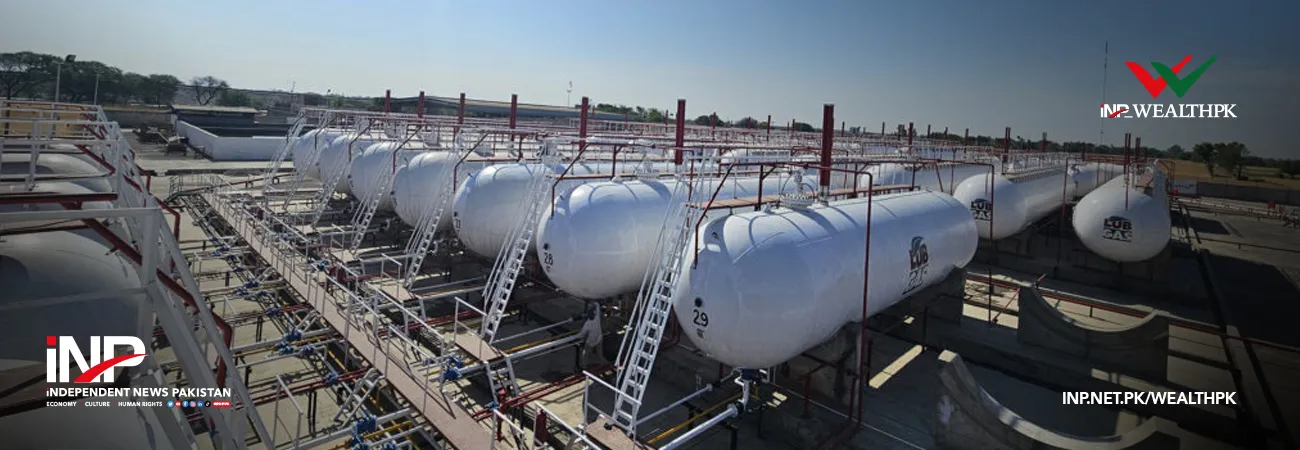
Talking to Wealth Pakistan, Jabbar said that of the country’s total daily LPG demand of around 6,500 tons, only about 2,000 tons are produced locally by refineries and other companies. The imported gas is handled by three LPG terminals — two at Port Qasim in Karachi and one at Gwadar — upon arrival in Pakistan.
“Whether imports from Iran continue or not, there is no option but to buy LPG from other countries such as Oman or Iraq,” he said.
He added that a small quantity of LPG is still being smuggled across the Pakistan-Iran border, while some shipments are arriving from other Middle Eastern countries by sea.
In the long term, the government should consider importing LPG via the Red Sea route, as imports through the Strait of Hormuz may no longer be feasible given the changing geopolitical landscape.
Meanwhile, according to dealers, LPG prices have already started increasing in Lahore and other parts of Pakistan as imports by sea and land have slowed sharply, raising the risk of domestic price spikes.
“In Lahore, LPG is being sold at rates ranging from Rs330 to Rs350 per kg, much higher than the rate of Rs226 fixed by the Oil and Gas Regulatory Authority for March,” said Ayyaz Muhammad, a dealer at Lahore’s Lytton Road.
He added that LPG sales are being carried out in a clandestine manner to avoid raids by district government price control committees. He claimed that LPG marketing companies were making hefty profits in the name of a gas shortage. LPG distributors have also demanded a long-term policy to deal with similar crises in the future.
“There is no need for any knee-jerk reaction. The government should formulate a long-term policy regarding the import and local production of LPG,” said Irfan Khokhar, Chairman of the LPG Distributors and Industries Association.
Talking to Wealth Pakistan, he said that alternative import routes would increase the cost of LPG. “The government should provide a subsidy on this fuel so that poorer segments of society do not suffer,” he said.
Meanwhile, in a bid to address concerns about potential disruptions or shortages in LPG supply due to the deteriorating geopolitical situation in the region, OGRA has directed all LPG marketing companies to submit daily reports of their LPG stocks.
According to a notification issued by the regulator, marketing companies are required to report the quantity of LPG available at their storage facilities and filling plants. The reports must specify stock levels in metric tons and be submitted by 9 am each day.
The measure is intended to enhance monitoring of LPG availability and ensure transparency in the supply chain, the notification added.
Credit: INP-WealthPk