



INP-WealthPk
Karachi BRT Yellow Line cost revised to $620m as govt approves major upgrades
June 16, 2026
By Ijaz Kakakhel
The cost of Karachi’s Bus Rapid Transit (BRT) Yellow Line has been revised upward to $620 million, driven by major design enhancements, inflationary pressures, and the introduction of environmentally sustainable transport features.
The revised PC-I was approved by the Executive Committee of the National Economic Council (ECNEC) on February 2, 2026, according to official project documents available with Wealth Pakistan.
Originally approved in October 2019 under the Karachi Mobility Project, the BRT Yellow Line was estimated to cost $438.9 million (Rs61.435 billion). However, after a comprehensive review of the project’s scope and requirements, authorities approved an increase of $181.1 million (Rs112.150 billion), bringing the total project value to approximately $620 million (Rs173.6 billion).
Project financing will continue to be shared among the World Bank, the government of Sindh, and private sector stakeholders. The World Bank remains the largest contributor, with its share increasing from $381.9 million to $537.2 million. The Sindh government’s contribution has also risen from $19.4 million to $37.5 million, while the private sector share has been revised from $37.5 million to $45.3 million.
According to the documents, the revision was necessary to address significant increases in construction and infrastructure costs over the past several years. The updated project also incorporates several new features to improve operational efficiency, climate resilience, and passenger convenience.
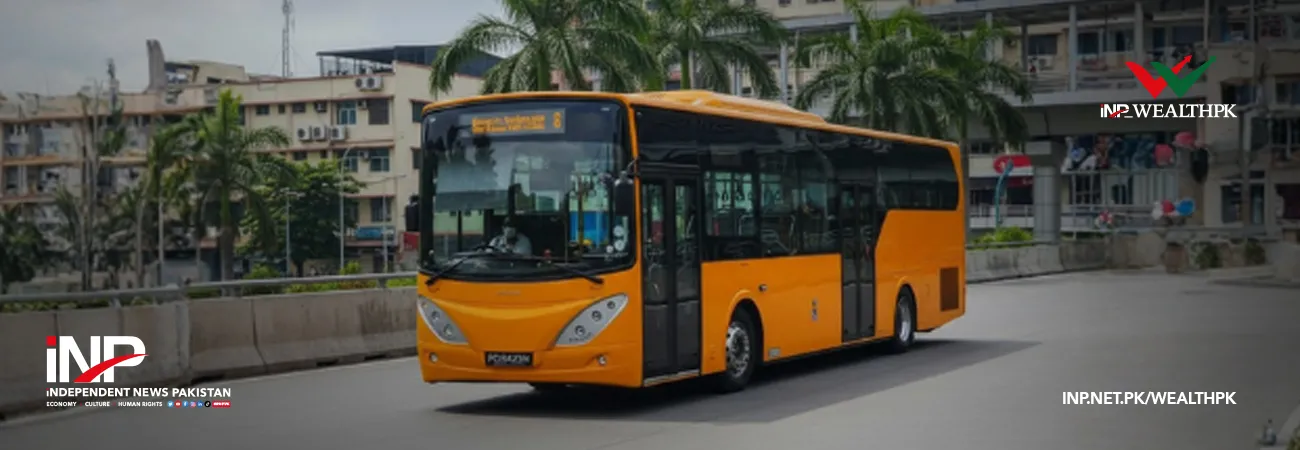
One of the most notable changes is the replacement of diesel-hybrid buses with electric buses, a move expected to reduce carbon emissions and support Karachi’s transition toward cleaner public transport. The revised plan also includes the development of charging infrastructure and allied facilities required for the fleet’s operation.
Additional improvements include the construction of extra parking facilities for electric buses. Authorities have also approved the construction of a new bridge parallel to the existing Jam Sadiq Bridge and a right-turn flyover at Sunset Boulevard to improve traffic flow along the corridor.
Several infrastructure upgrades have been incorporated into the project, including conversion of four underpasses into flyovers in the Korangi area and the construction of a flyover at the Tariq Road intersection. These measures will help reduce congestion and improve connectivity for commuters.
The revised scope also includes a dedicated sewerage system for industrial waste, rehabilitation of drainage systems, construction of bus stops and sidewalks, and full-depth pavement upgrades on Korangi Road.
In line with sustainability goals, solar power systems will be installed at project stations. The revised estimates also account for the implementation of Sindh Sales Tax and higher unit rates resulting from updated construction schedules and market conditions.
The documents further reveal that despite an increase in costs, additional investment will result in a modern, efficient, and environmentally friendly transport system for Karachi. The enhanced project design is expected to improve long-term service reliability while supporting the city’s growing transportation needs.
Credit: INP-WealthPk