INP-WealthPk

IBI digital hub opens global market access for Pakistan’s SMEs
June 16, 2026
By Hasan Salahuddin
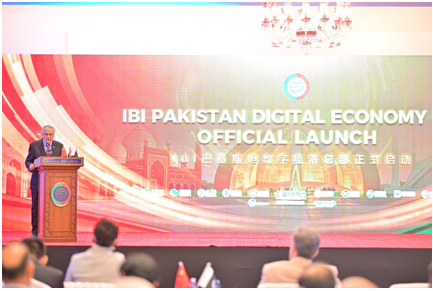
Pakistan has moved a step closer to integrating its small and medium enterprises (SMEs) into the global digital economy with the launch of the IBI Pakistan Digital Economy Headquarters, a platform designed to connect local businesses with international markets, supply chains and technology-driven trade opportunities.
The initiative, inaugurated by Deputy Prime Minister Ishaq Dar in Islamabad on May 13, signals an important shift in the China-Pakistan Economic Corridor (CPEC) from a focus on physical infrastructure to digital and intelligent connectivity.
The headquarters serves as the Pakistan-based presence of Beijing United Information Technology Co., Ltd. (IBI), a Shanghai-listed Chinese industrial e-commerce and industrial internet company. The platform aims to strengthen digital trade links by connecting Pakistani enterprises with industrial buyers, online marketplaces, supply chain networks and advanced business services.
For Pakistan’s SMEs, the initiative offers a structured pathway into cross-border e-commerce, digital procurement, logistics integration and data-driven market opportunities. The IBI platform, described by Pakistan’s Ambassador to China Khalil Hashmi as an “e-commerce giant of industrial goods,” links enterprises across more than 100 industrial sectors and provides access to Chinese and global supply chains.
The development comes at a time when SMEs remain a vital pillar of Pakistan’s economy. According to the International Finance Corporation (IFC), SMEs account for around 80 percent of the country’s non-agricultural workforce, contribute 30-40 percent to GDP and generate nearly 25 percent of exports. Despite their significance, many of these enterprises continue to face barriers in reaching international markets.
Pakistan’s digital economy, meanwhile, is gaining momentum but still has substantial room for growth. The World Bank reported that the information and communications technology (ICT) sector contributed only 3 percent to GDP in FY24, while Pakistan’s share of globally delivered digital exports stood at just 0.1 percent.
Recent indicators, however, point to accelerating growth. The Pakistan Economic Survey 2024-25 showed that IT and IT-enabled services exports increased by 23.7 percent year-on-year to $2.825 billion during July-March FY2025. Meanwhile, the Ministry of Commerce’s draft e-Commerce Policy 2.0 (2025-30) reported a 1,400 percent increase in e-commerce transaction value between FY2019 and FY2024.
Experts believe the IBI headquarters can help translate this digital momentum into broader export opportunities for Pakistani businesses.
Speaking with Wealth Pakistan, Dr Abdul Wahab, Assistant Professor at the National University of Computer and Emerging Sciences (NUCES), Islamabad, said the platform could serve as an important gateway for Pakistani SMEs seeking access to regional and global digital markets.
He said the initiative could help businesses connect with large industrial e-commerce platforms and international buyers while enabling agribusinesses to improve market access, product traceability and supply chain transparency. Manufacturers could also benefit from digital procurement systems, logistics solutions and stronger integration into international supply chains.
Dr Wahab noted that the use of artificial intelligence and data analytics would help businesses identify market opportunities, understand customer demand and reduce transaction costs that often limit SME participation in export markets. He added that the platform could accelerate the adoption of modern technologies and business practices across multiple sectors.
To maximise the benefits of the initiative, he stressed the importance of improving digital skills and technological readiness among SMEs and entrepreneurs. He also called for greater technology transfer through joint research centres, AI laboratories and stronger collaboration between industry and academia, alongside support for startups through incubators and accelerator programmes.
Faisal Butt, Private Sector Specialist at Pakistan Single Window (PSW), Islamabad, said the headquarters could help address one of the key challenges facing smaller businesses: limited access to international buyers and digital trade channels.
He noted that Pakistan possesses considerable export potential in sectors such as agriculture, textiles, sports goods, surgical instruments and light manufacturing. However, many SMEs continue to struggle with market access and international visibility.
According to Butt, partnerships of this nature can provide businesses with access to international B2B marketplaces, e-commerce platforms, digital payment systems and advanced logistics networks. In agriculture, digital integration can enhance product traceability and strengthen direct connections between exporters and buyers. Industrial SMEs, meanwhile, can gain greater visibility within global supply chains and improve access to overseas customers.
He cautioned, however, that the success of such initiatives would depend heavily on localisation. Digital solutions, he said, must be adapted to Pakistan’s regulatory environment, business culture, infrastructure and the practical needs of local enterprises rather than applied without modification.
Butt also emphasised the need for regulatory frameworks to evolve alongside digital trade. He said policies governing cross-border payments, customs procedures and taxation must remain aligned with emerging platform-based trade models to ensure sustainable growth.
The launch of the IBI Pakistan Digital Economy Headquarters reflects the growing digital dimension of CPEC 2.0 and offers Pakistani SMEs a new avenue to participate in global commerce. Experts believe that with stronger digital capabilities, supportive regulations and sustained capacity-building efforts, the platform can help unlock the full export potential of Pakistan’s SME sector and strengthen the country’s position in the global digital economy.
Credit: INP-WealthPk