


INP-WealthPk

Gulf uncertainty may pose risks to Pakistan’s remittance inflows over time
March 30, 2026
By Azam Tariq
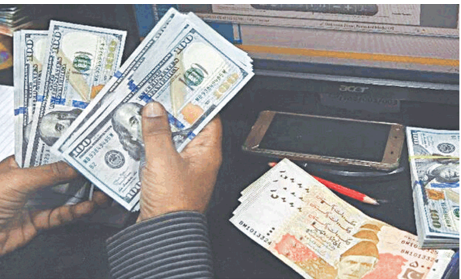
Pakistan’s growing dependence on remittances from the Gulf region is emerging as a potential vulnerability amid rising geopolitical tensions in the Middle East, analysts caution, noting that prolonged instability could undermine a key pillar of the country’s external finances.
While remittance inflows have recently supported Pakistan’s external position, concerns are increasing that any sustained disruption in Gulf economies could weaken this critical financial lifeline.
Recent tensions involving major regional actors have heightened the risk of economic spillovers across the Middle East. For Pakistan, which relies heavily on overseas workers in Gulf Cooperation Council (GCC) countries, this raises concerns about labour market stability, business activity and future migration flows.
A study by the Pakistan Institute of Development Economics (PIDE) highlights that any disruption in Gulf economies could directly affect migrant employment and remittance inflows. Pakistan’s heavy reliance on the Middle East for labour exports and remittance earnings remains a structural vulnerability.
The study warns that if the conflict persists, around half a million new workers may not be able to migrate to the Middle East in 2026, while a similar number could be forced to return. Such a shift could have serious implications for the domestic labour market and may reduce remittance inflows by $3–4 billion annually.
Analysts say Pakistan’s exposure to the Gulf is both deep and highly concentrated. Dr Abid Qaiyum Suleri, Executive Director of the Sustainable Development Policy Institute (SDPI), told Wealth Pakistan that Saudi Arabia accounts for 23.5% of remittance inflows, while the United Arab Emirates contributes 20.6%, bringing their combined share to around 44%.
He noted that labour migration is even more concentrated, with 96% of officially registered emigrants heading to GCC countries. In 2024 alone, 62% of workers went to Saudi Arabia and 9% to the UAE.
Suleri explained that Gulf-based migrants tend to remit more due to temporary migration patterns and strong family linkages. However, this dynamic can weaken when economic uncertainty affects host countries.
According to him, a slowdown in sectors such as construction, logistics and services — key employers of Pakistani workers — could reduce job opportunities, weaken worker confidence and make remittance flows less stable.
Given that remittances are expected to offset much of Pakistan’s trade deficit and keep the FY26 current account gap within 0–1% of GDP, even moderate disruptions could strain external balances, slow reserve accumulation and put pressure on the currency.
Dr Muhammad Jehangir Khan, Associate Professor and Director at the Centre for Sustainable Futures (CSF), PIDE, said Pakistan’s dependence on Gulf remittances is deeply embedded and difficult to unwind in the short term.
He pointed out that Saudi Arabia contributed $7.4 billion in FY2024, about 25% of total remittances, while the UAE added $5.5 billion, or nearly 19%. Together, these flows account for almost half of Pakistan’s total remittance receipts.
While remittances rose to a record $38.3 billion in FY2024–25, he said this growth also reflects increased exposure to regional risks.
Citing United Nations data, he noted that around 3.85 million Pakistani migrants reside in GCC countries, forming more than half of the country’s overseas workforce.
He added that most workers are employed in low- and semi-skilled roles, such as labourers and drivers, making them particularly vulnerable to economic slowdowns.
He warned that prolonged tensions could disrupt recruitment pipelines, reduce employment opportunities and lead to annual remittance losses of $3–4 billion, with significant implications for Pakistan’s external account stability.
Overall, while remittances continue to provide vital support to Pakistan’s economy, emerging risks linked to Gulf instability highlight the need for greater resilience.
Diversifying export markets, upgrading workforce skills and expanding employment opportunities beyond traditional destinations could help reduce Pakistan’s external vulnerability and strengthen long-term stability.
Credit: INP-WealthPk