INP-WealthPk
Gulf route disruption threatens Pakistan’s exports to key GCC markets
June 16, 2026
By Moaaz Manzoor
Pakistan’s direct exports to Gulf Cooperation Council (GCC) countries could potentially fall by $0.6 billion over the next three to six months as Iran-linked regional tensions disrupt air and sea logistics, according to a Ministry of Commerce document available with Wealth Pakistan.
The document said the ongoing confrontation involving Iran had evolved from a regional political dispute into a wider economic risk, disrupting Pakistan’s trade with GCC countries and making exports more expensive because of higher logistics costs.
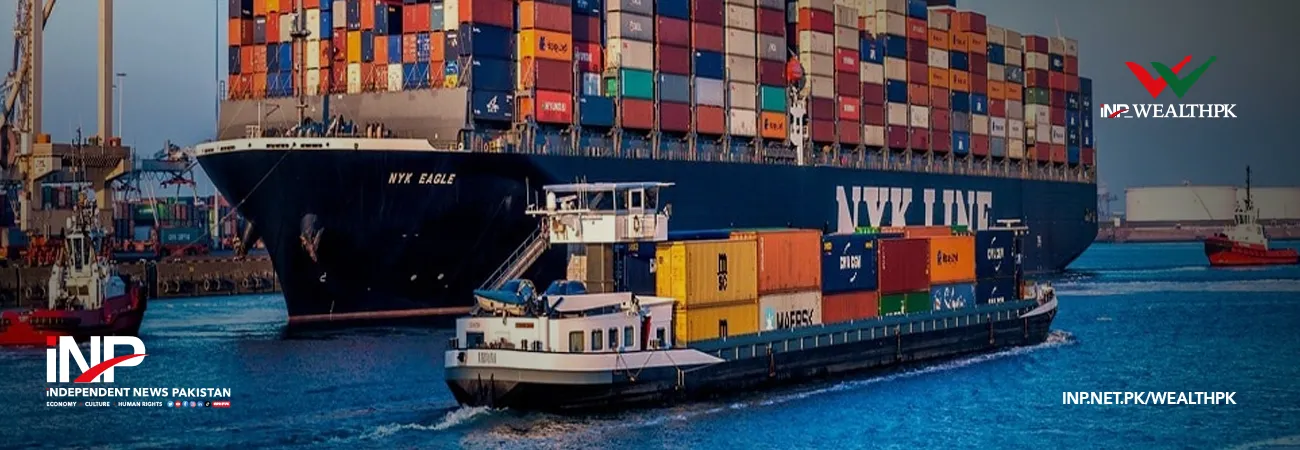
The warning is significant for Pakistani exporters because the Gulf region is not only a major market but also a key logistics hub. According to the document, around 80 per cent of Pakistan’s trade with GCC countries is done through Jebel Ali Port in the United Arab Emirates, exposing exporters and importers to route disruption when shipping through the Gulf comes under pressure.
The ministry document said sea and air routes were severely disrupted, particularly through the Strait of Hormuz, while transportation costs increased. It noted that most international shipping lines suspended operations between Pakistan and GCC countries in March, though some resumed operations in April.
The disruption was visible in Pakistan’s monthly exports to GCC markets. Exports to GCC countries fell 70 per cent year-on-year in March 2026 to $95.43 million from $315.14 million in March 2025, according to the document. In April 2026, exports were 23.9 per cent lower at $152.46 million, down from $200.39 million in April 2025.
The country-wise data showed sharp pressure across several Gulf markets. Exports to the UAE fell 74.5 per cent year-on-year in March and 39.8 per cent in April. Exports to Saudi Arabia declined 56.6 per cent in March but recovered 17.6 per cent in April. Bahrain, Kuwait and Qatar remained weak in April, while Oman showed a 43.8 per cent increase.
For the July-April period as a whole, Pakistan’s exports to GCC countries declined 2.2 per cent to $2.493 billion in FY2025-26 from $2.549 billion in the same period last year. Exports to the UAE rose 4.5 per cent to $1.559 billion, while shipments to Saudi Arabia fell 10 per cent, Oman 24.5 per cent, Qatar 18.1 per cent and Bahrain 13.2 per cent. Kuwait was up 10.6 per cent during this period.
Imports from GCC countries moved in the opposite direction, raising concerns about pressure on Pakistan’s trade balance. The document shows imports from GCC countries rising 2.9 per cent to $13.575 billion during July-April FY2025-26 from $13.194 billion a year earlier.
The pressure was sharper in April, when imports from GCC countries increased 25.5 per cent year-on-year to $1.814 billion from $1.445 billion in April 2025. Imports from the UAE rose 49.8 per cent in April 2026, while imports from Saudi Arabia increased 67.1 per cent and Oman 196.8 per cent.
The document warns that higher energy prices could increase Pakistan’s import bill and destabilise local production and export flows. For businesses, this means the risk is two-sided: exports may face delays and higher freight costs, while energy-linked imports may become more expensive.
The Ministry of Commerce document said the government had taken several steps to manage the disruption. Freighter flight frequencies were increased, ad hoc charges imposed by ground-handling agents at airports on exports were removed, and air freight rates with GCC airlines were negotiated downward.
Shipping has also been diverted to Jeddah Port in Saudi Arabia and the ports of Sohar and Salalah in Oman. The document said Pakistan National Shipping Corporation oil tankers were bringing petrol from Saudi Arabia and the UAE. At the same time, a small PNSC commercial vessel started operations from Karachi to Khorfakkan on May 18, 2026.
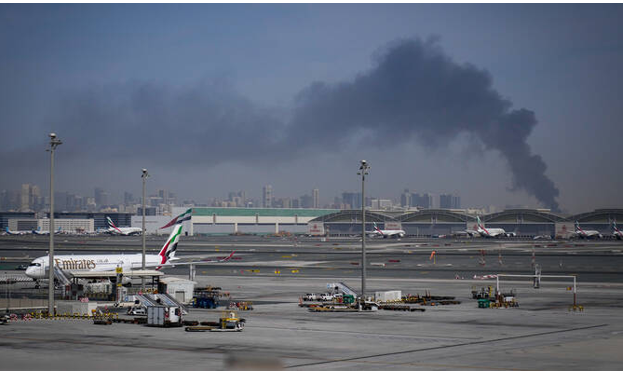
Air logistics also recovered in April after cancellations reached 30 per cent in March, according to the document.
The figures show that Pakistan’s exposure to Iran-linked Gulf tensions is not limited to diplomacy or regional security. For exporters, the immediate challenge is maintaining shipments to GCC buyers despite higher logistics costs. For policymakers, the priority will be reducing dependence on a narrow set of routes before a temporary disruption turns into a deeper trade loss.
Credit: INP-WealthPk