



INP-WealthPk

AIIB's private-sector financing plans could widen infrastructure investment options for Pakistan
June 23, 2026
By Azam Tariq
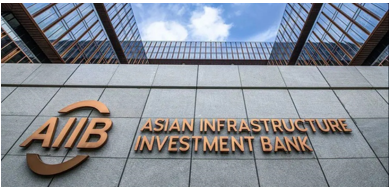
The Asian Infrastructure Investment Bank's (AIIB) plans to explore non-sovereign and private-sector financing in Pakistan could help mobilise long-term investment for critical infrastructure projects and reduce pressure on public finances, experts say.
The prospect gained attention after AIIB President Ms. Zou Jiayi, during a recent meeting with Federal Minister for Economic Affairs Ahad Cheema, indicated the bank's interest in expanding its engagement in Pakistan beyond sovereign lending. According to the AIIB president, the bank's overall portfolio in Pakistan stands at nearly $3.5 billion.
Experts believe the move reflects a broader shift among multilateral development banks toward mobilising private capital alongside traditional sovereign lending, creating new opportunities for countries facing fiscal constraints.
Speaking with Wealth Pakistan, Irfan Bukhari, founding member of the Export Import (EXIM) Bank of Pakistan, said AIIB's private financing push could help attract international capital that has traditionally remained cautious about entering Pakistan.
"Private capital, when properly structured, deployed and monitored, can be mobilised at a scale and speed no multilateral borrowing can match," he said.
Bukhari noted that AIIB's private-sector window could serve as a quality signal and risk mitigant for international investors. He said participation by a multilateral development bank often encourages commercial lenders to enter markets they might otherwise avoid.
"Done well, AIIB's non-sovereign instruments can deliver blended finance structures that de-risk projects enough to attract capital that would otherwise shun Pakistan's risk profile," he said.
He added that such financing could provide longer-tenor funding of 15 to 25 years, which domestic banks generally struggle to offer for large infrastructure projects.
However, Bukhari cautioned that Pakistan's experience with public-private partnerships highlights the need for stronger institutions and improved governance before new financing models can achieve their full potential.
He pointed to the power sector's circular debt challenge as an example of how policy and planning shortcomings can undermine otherwise viable investment frameworks.
"Capacity payments did not cause the circular debt crisis. Excess generating capacity installed caused it, and excess capacity is the direct consequence of demand projections the government made, approved and never realised," he said.
Bukhari stressed that private capital cannot substitute for public accountability and can only function effectively alongside sound policymaking and project management.
Imran Ur Rahman, Associate Professor and Senior Research Fellow at the Center for Trans-Himalaya Studies, School of Economics and Management, Leshan Normal University in Sichuan, China, said AIIB's private-sector financing could unlock substantial investment opportunities in Pakistan's infrastructure sector without adding to the government's debt burden.
"It can mobilise long-term capital for critical infrastructure projects in energy, transport and water without adding to Pakistan's public debt," he said.
Rahman noted that blended finance and credit enhancement mechanisms could make projects more attractive to commercial lenders by lowering perceived investment risks.
He said successful non-sovereign transactions backed by a credible multilateral institution such as AIIB would also send a positive signal to global investors.
"Successful deals demonstrate that reputable multilateral institutions are willing to back commercially viable projects in Pakistan, which can encourage other international investors to reassess their risk perceptions," he said.
According to experts, the success of any expansion in private-sector financing will depend on Pakistan's ability to strengthen regulatory frameworks, improve project preparation, and channel investment into sectors capable of generating economic returns and foreign exchange earnings.
As infrastructure financing needs continue to outpace available public resources, they believe greater participation by institutions such as AIIB in private-sector projects could provide Pakistan with an important source of long-term development capital while reducing reliance on sovereign borrowing.
Credit: INP-WealthPk