



INP-WealthPk

Fixed-income, informal workers faced exposure during 2019–2025 volatility period
February 26, 2026
Farooq Awan
Households dependent on fixed incomes and informal sector earnings were exposed to economic volatility during the FY2019–FY2025 period, according to the Preliminary Report on Poverty Estimation 2024-25 issued by the Ministry of Planning, Development and Special Initiatives.
The report documents that the six-year period under review was marked by sustained inflation, price volatility and macroeconomic disruptions, which influenced household consumption levels used in poverty calculations. Inflation peaked at 29% in 2022-23, affecting real purchasing power across all income categories.
According to the document, while nominal household incomes increased during the period, real incomes experienced compression due to cumulative price increases. The poverty estimation framework incorporates these changes through updated price indices and consumption adjustments.
The report presents poverty and inequality estimates based on Household Integrated Economic Survey (HIES) data, using adult equivalence scales and regional price adjustments. The national poverty line for FY2024-25 was set at Rs8,483 per adult equivalent per month.
During the review period, the national poverty headcount ratio rose from 21.9% in 2018-19 to 28.9% in FY2024-25. The document attributes this change to macroeconomic developments recorded over the six-year span, including elevated inflation and economic shocks.
The report states that real household consumption declined during years of high inflation, despite nominal income growth. The erosion in purchasing power formed part of the overall environment reflected in poverty outcomes.
The estimation framework does not disaggregate poverty data by employment category; however, the document notes that income compression occurred during a period characterized by inflationary pressures and economic volatility.
In addition to inflation, the review period saw economic contraction during the COVID-19 pandemic, global commodity price increases and flood-related losses. These events contributed to the macroeconomic backdrop against which poverty levels were assessed.
The report maintains methodological consistency with earlier survey rounds to allow for comparison between 2018-19 and 2024-25. Poverty and inequality indicators are calculated using standardized procedures applied uniformly across provinces and regions.
The Preliminary Report on Poverty Estimation 2024-25 presents the findings as part of the official national assessment, documenting real income compression and elevated poverty levels during a period marked by sustained economic volatility between FY2019 and FY2025.
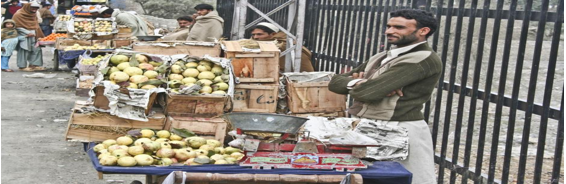
Credit: INP-WealthPk