



INP-WealthPk
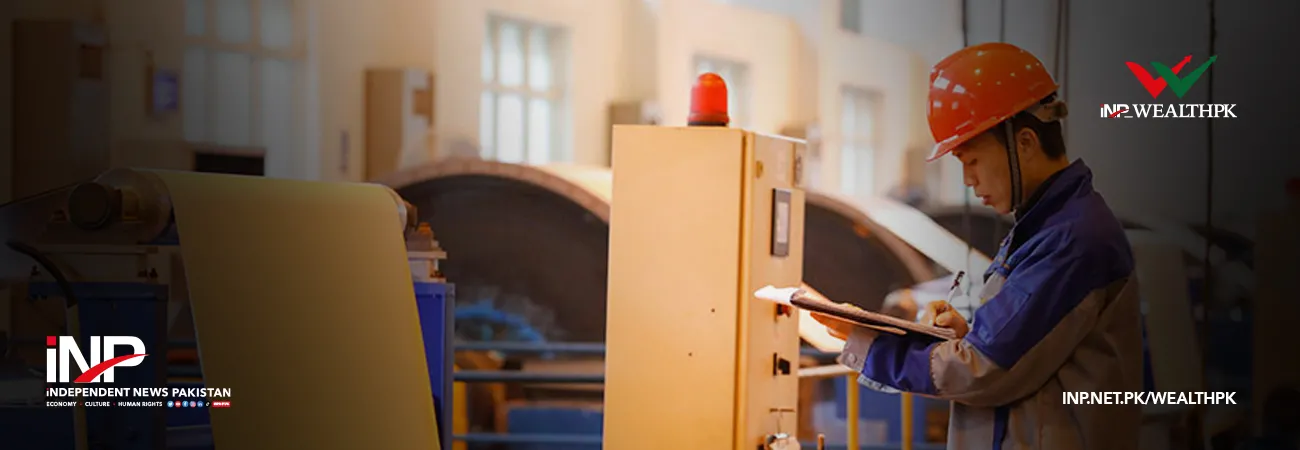
China’s workforce strategy offers roadmap for preparing Pakistan’s future workforce
March 26, 2026
By Qudsia Bano
China’s 15th Five-Year Plan (2026–2030) places workforce transformation at the centre of its development agenda, offering Pakistan a practical model to align skills, education and industry with the demands of a technology-driven global economy.
As automation, artificial intelligence and digital industries reshape production systems, China is focusing on large-scale upskilling and labour market adaptation to sustain long-term growth.
The plan emphasises aligning education, vocational training and industrial policy with emerging technological trends. As China moves toward high-value manufacturing and innovation-led growth, demand for skilled labour is expected to rise significantly, particularly in areas such as AI, robotics and digital services.
A central element of China’s strategy is the expansion and modernisation of vocational education. Technical training is being integrated more closely with industry needs through partnerships between educational institutions and enterprises.
This approach helps reduce the mismatch between labour supply and market demand — a challenge that also affects Pakistan.
For Pakistan, where skills gaps persist despite a growing labour force, strengthening vocational training systems and aligning them with industry requirements remains critical for improving productivity and employment outcomes.
China’s strategy treats automation as an opportunity rather than a threat. By combining advanced manufacturing with worker retraining, the plan aims to create a more adaptable and resilient workforce.
Digital skills development is also a major focus. China is investing in digital literacy and advanced technical skills to support the integration of technology across industries and public services.
This shift is expected to create new job opportunities while requiring continuous skill upgrades.
In Pakistan, where digital skills remain unevenly distributed, similar investments could help prepare workers for emerging sectors and reduce the risk of job displacement.
Dr Ahmed Faraz, Professor of Economics at the Pakistan Institute of Development Economics (PIDE), told Wealth Pakistan that Pakistan must urgently reform its education and training systems to align with market needs.
He said China’s experience highlights the importance of linking vocational training with industrial policy to ensure workforce development supports broader economic goals.
According to him, expanding and improving technical education can significantly enhance productivity and employment outcomes in Pakistan.
He also pointed to the role of the private sector, noting that in China, enterprises actively collaborate with educational institutions to design training programmes and provide practical experience.
Encouraging similar partnerships in Pakistan could help bridge the gap between education and employment, making graduates more job-ready.
Dr Faraz said automation should not be viewed solely as a risk. With the right policies, it can increase efficiency and create new types of jobs.
However, he cautioned that without adequate investment in skills development, technological change could worsen unemployment and inequality.

Credit: INP-WealthPk