



INP-WealthPk
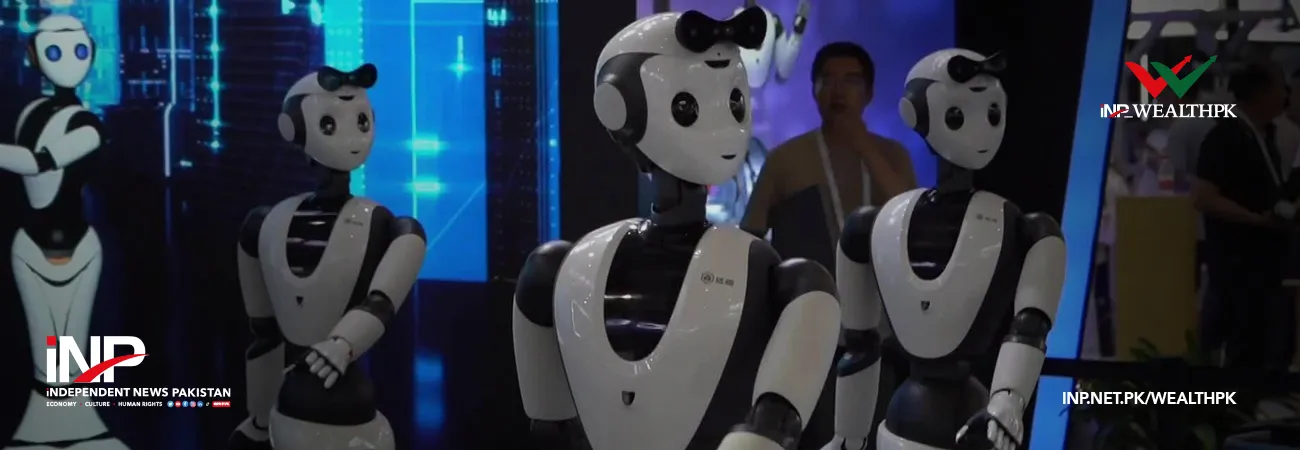
China’s robot boom signals automation challenge and opportunity for Pakistan
June 02, 2026
By Qudsia Bano
China’s rapid expansion in robotics is reshaping global manufacturing economics and raising an important question for Pakistan: can a labour-rich economy remain competitive without accelerating industrial automation?
China produced 773,074 industrial robots in 2025, up 28 percent year-on-year, while its December 2025 output alone reached 90,116 units, according to the National Bureau of Statistics of China. The same official data showed that China produced 18.58 million service robots in 2025, reflecting a 16.1 percent increase.
The International Federation of Robotics’ (IFR) World Robotics 2025 report showed that China already had 2.027 million industrial robots operating across factories, while annual installations reached 295,045 units in 2024, accounting for 54 percent of total global industrial robot installations.
The latest IFR data also showed that Asia installed 401,665 industrial robots in 2024, representing 74 percent of all new global deployments, highlighting the growing concentration of automation within Asia’s manufacturing landscape.
For Pakistan, the challenge appears increasingly significant as the country’s manufacturing sector continues facing pressure. The Pakistan Economic Survey 2024-25 reported manufacturing growth of only 1.3 percent in FY2025, compared with 3.0 percent a year earlier, while large-scale manufacturing contracted by 1.5 percent during July-March FY2025.
The labour market implications also require careful planning. Pakistan’s Labour Force Survey 2024-25 showed that manufacturing accounted for 14.8 percent of total employment, while the overall unemployment rate under the new 19th ICLS standard stood at 7.1 percent.
Industry observers believe the lesson from China is not that Pakistan should replace workers with machines, but rather adopt targeted automation where quality, consistency, energy efficiency and export competitiveness are being constrained.
Muzamil Majeed, Senior Researcher at RIME (Robotics & Intelligent Machine Engineering), said Pakistan’s industries should view robotics primarily as a productivity tool rather than a labour-reduction strategy.
He said sectors such as auto parts, packaging, pharmaceuticals, food processing, electronics assembly and precision engineering could begin with cost-effective automation solutions, including sensors, programmable logic controller (PLC) systems and robotic handling systems before gradually shifting toward fully automated production lines.
He said China’s advantage stemmed from scale, local component manufacturing and consistent policy support, whereas Pakistan continued relying heavily on imported equipment and fragmented adoption patterns. For Pakistani manufacturers, he said, the first step should involve identifying repetitive, unsafe and quality-sensitive processes where automation can reduce waste and improve export reliability.
Tufail Ahmed, Operations Manager at Lean Automation Pvt Ltd Pakistan, said small and medium manufacturers in Pakistan had shown growing interest in automation but continued facing three major obstacles: high initial investment costs, a shortage of skilled technicians and uncertainty regarding return on investment.
He said automation vendors, technical institutes and industrial estates should jointly establish demonstration facilities so manufacturers could practically assess the benefits before making investment decisions.
He said Pakistan should avoid attempting to replicate China’s robotics model overnight. Instead, the country should focus on building domestic capabilities in maintenance services, retrofitting, machine vision, industrial software and systems integration.
According to him, such an approach could create skilled employment opportunities while helping existing industries modernise in a gradual and sustainable manner.
China’s robotics expansion may therefore represent both a challenge and an opportunity for Pakistan. Delayed action could expose domestic manufacturers to stronger competition from highly automated Asian supply chains. However, a practical and phased automation strategy could help Pakistan protect jobs through skill upgrading, improve productivity and prepare industries for higher-value exports.
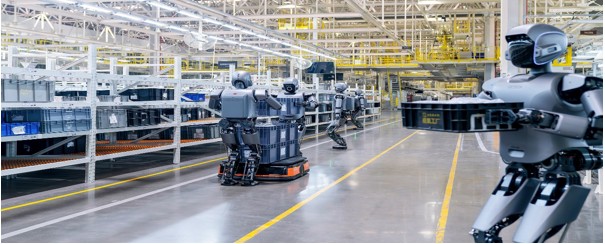
Credit: INP-WealthPk