



INP-WealthPk
China’s grid transformation offers lessons for Pakistan’s power sector reform
April 29, 2026
By Hasan Salahuddin
China’s rapid transformation of its power grid has redefined how developing nations can scale renewable integration while enhancing system reliability. Pakistan, grappling with outdated infrastructure and chronic energy insecurity, stands to gain valuable insights from China’s strategic investments and policy frameworks in grid modernisation.
The scale of China’s progress becomes clearer when viewed through the size of its long-term commitments. The State Grid Corporation of China has announced plans to invest 4 trillion yuan in fixed assets during the 15th Five-Year Plan period (2026–2030).
This significant allocation underscores the country’s commitment to advancing power infrastructure to support economic growth and the transition toward cleaner energy systems.
China has deployed ultra-high-voltage (UHV) transmission lines spanning thousands of kilometres, effectively linking renewable-rich western regions with energy-intensive eastern demand centres, while also advancing sophisticated digital and intelligent grid systems.
Together, these investments reflect not only infrastructure expansion but also a broader strategic vision for the power sector. During a 2026 visit to Sichuan, Premier Li Qiang reinforced this direction by calling for a new-type power grid that is safe, reliable, green, low-carbon, resilient, smart, and flexible.
While China is investing in transmission infrastructure ahead of demand, Pakistan continues to face deep structural weaknesses in power delivery, alongside persistent circular debt and high system losses.
According to the National Electric Power Regulatory Authority (NEPRA)’s State of Industry Report 2024, aggregate DISCO transmission and distribution losses rose to 18.31% in FY2023–24, significantly exceeding the allowed 11.77%, and adding approximately Rs276 billion to circular debt.
Furthermore, NEPRA’s FY2024–25 distribution performance report estimated an additional Rs265 billion loss to the national exchequer, while the Power Division reported that circular debt reached Rs1.614 trillion in June 2025. These figures underline both the scale of Pakistan’s power-sector challenges and the urgency of systemic reform.
Speaking with Wealth Pakistan, Sayed Khawar Bukhari, Chief Executive Officer of Grid Alternatives Pvt Ltd, said Pakistan will derive limited value from successful international grid models unless its policy framework becomes more forward-looking and implementation-focused.
In his view, reform must anticipate climate change, address obsolete grid infrastructure, secure long-term investment, and reduce the cost of renewable energy deployment.
Mazhar Hasnain, Deputy Manager Transmission Planning at Lahore Electric Supply Company Limited, described China’s grid as a global benchmark across three core areas: reliability, renewable energy integration, and energy security.
He explained that China’s progress in grid reliability stems from proactive investment in transmission infrastructure ahead of demand, whereas Pakistan’s underfunded transmission system continues to create bottlenecks that require urgent national prioritisation.
On renewable integration, Hasnain noted that China has incorporated more than 1,200 gigawatts of renewable capacity by enforcing a nationally coordinated grid code, standardising interconnection requirements, and investing in grid-scale storage and flexible dispatch systems.
Pakistan, while expanding solar and wind capacity, still lacks the grid flexibility and storage infrastructure required to effectively manage intermittency.
Most critically, Hasnain highlighted Pakistan’s heavy reliance on imported fuels, which costs roughly $14 billion annually in foreign exchange and contributes to tariff increases, circular debt, and broader energy insecurity. Currency depreciation further compounds electricity costs before generation even begins.
He emphasised that Pakistan’s hydropower potential in the northern regions, combined with abundant wind and solar resources in the south, provides a strong foundation for reform; however, progress depends on sustained and consistent policy commitment.
Mujahid Shahbaz, Team Lead Power System Studies at Power Planners International, framed China’s experience as a sequence of practical lessons that Pakistan can adapt.
He stressed the need to strengthen the transmission backbone by expanding high-voltage and ultra-high-voltage lines to efficiently transport electricity from resource-rich regions to demand centres, thereby reducing congestion and technical losses.
Shahbaz also underscored the importance of digitalisation. China’s adoption of smart grid technologies—including real-time monitoring, automation, and AI-based forecasting—has significantly improved system performance. Pakistan can move in this direction by upgrading SCADA systems, deploying wide-area monitoring tools, and adopting data-driven grid management practices.
He further emphasised that renewable energy integration must be supported by flexibility measures such as battery storage, hydropower balancing, and improved demand forecasting to manage the variability of solar and wind generation.
Stronger coordination between generation, transmission, and distribution entities, he added, is essential to improve dispatch decisions and reduce inefficiencies across the system.
Finally, Shahbaz recommended that Pakistan prioritise reducing technical and commercial losses while ensuring the dispatch of low-cost renewable energy, thereby minimising avoidable curtailment and system waste.
Modernising Pakistan’s grid will require decisive policy action that reflects China’s strategic approach, with a focus on resilient infrastructure and advanced digital technologies.
Adopting these priorities could help Pakistan address systemic inefficiencies, improve energy security, and support long-term economic stability in an increasingly complex global energy landscape.
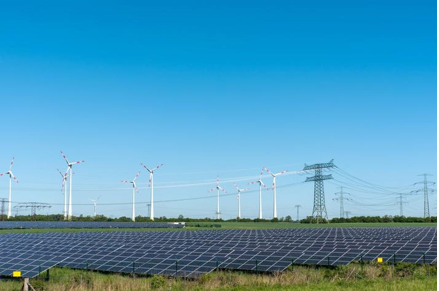
Credit: INP-WealthPk