



INP-WealthPk

China’s disaster resilience model offers experience for climate-vulnerable Pakistan
June 02, 2026
By Azam Tariq
China’s renewed focus on disaster prevention, community-level emergency response systems and public preparedness offers valuable experience for Pakistan as climate-induced floods, heatwaves, landslides and urban flooding continue to challenge the country’s resilience and response capacity, experts say.
China has recently called for strengthening natural disaster prevention and emergency response mechanisms, including integrating safety and resilience considerations into territorial planning and infrastructure development.
According to a report published by China’s state-run news agency Xinhua, the country is also focusing on raising safety standards for critical infrastructure in major cities and disaster-prone regions, improving monitoring and early-warning systems, refining emergency response plans and enhancing community-level rescue capabilities.
The policy focus has been reflected in China’s recent flood management efforts. China’s Ministry of Water Resources has activated a Level-IV flood-control emergency response for Anhui, Henan, Chongqing and Shaanxi, while maintaining the same level of alert in Jiangxi, Hubei and Hunan.
For Pakistan, the relevance is significant. The Pakistan Floods 2022 Post-Disaster Needs Assessment estimated that the devastating floods caused damages exceeding $14.9 billion and economic losses of approximately $15.2 billion. The assessment further projected that at least $16.3 billion would be required for resilient recovery and reconstruction efforts.
Meanwhile, UNESCO’s 2026 review of Pakistan’s Flood Early Warning System highlighted persistent challenges in data integration, inter-agency coordination, localized warning mechanisms, community engagement and last-mile communication, underscoring the need for comprehensive reforms in disaster management.
Pakistan already possesses some important foundations for community resilience. According to the Aga Khan Agency for Habitat, hazard and risk maps have been prepared for 828 villages covering more than 1.1 million residents in Gilgit-Baltistan and Chitral, along with 112 maps for urban settlements.
Experts believe Pakistan does not need to replicate China’s model in its entirety. However, adapting key elements such as risk-sensitive urban planning, integrated early-warning systems and trained community volunteer networks could significantly reduce disaster losses, accelerate emergency response and strengthen long-term resilience against climate-related shocks.
Speaking with Wealth Pakistan, Arif Goheer, Executive Director of the Global Climate-Change Impact Studies Centre, said Pakistan’s urban resilience strategy must be built on scientific risk assessments, climate projections and effective regulatory enforcement.
He noted that nearly 40 percent of Pakistan’s population now resides in urban areas, while increasingly frequent extreme rainfall events are overwhelming aging drainage networks and urban infrastructure.
According to Goheer, rapid urban expansion into flood-prone areas, encroachments on natural drainage channels, weak enforcement of seismic building standards and inadequate stormwater management systems have heightened disaster risks in cities such as Karachi, Lahore, Peshawar and Islamabad.
He stressed the need to revise and strictly enforce building codes to incorporate flood-resilient, heat-resilient and earthquake-resistant standards, particularly for housing schemes, public infrastructure, hospitals, schools and transport networks.
On early-warning systems, Goheer said China’s experience demonstrates that disaster risk reduction is most effective when advanced forecasting technologies, integrated data platforms and strong institutional coordination function together.
He recommended integrating the Pakistan Meteorological Department, National Disaster Management Authority, Water and Power Development Authority, Federal Flood Commission, provincial disaster management authorities, research institutions and local administrations into a unified national climate and disaster intelligence system.
He further emphasized the need for wider Doppler radar coverage, high-resolution weather forecasting, flash-flood guidance systems, glacial lake outburst flood monitoring and artificial intelligence-based risk analytics to strengthen Pakistan’s preparedness.
Muneeb Tariq, a doctoral researcher at the University of Lincoln in the United Kingdom, told Wealth Pakistan that Pakistan’s urban growth has consistently outpaced regulatory oversight, particularly in flood plains and seismically active areas.
He said that while Pakistan has building codes and zoning regulations, implementation remains weak and the gap between planning and enforcement continues to expose communities to avoidable risks.
Tariq argued that flood-plain mapping and seismic risk assessments should become mandatory prerequisites for development approvals, particularly in vulnerable cities such as Peshawar, Quetta and Karachi.
He added that Pakistan’s recent disaster experience demonstrates that warnings are often available, but the chain connecting detection, decision-making and community action frequently breaks down.
“The priority should be clear, pre-agreed protocols that define who issues alerts, who authorises evacuations and who coordinates emergency logistics,” he said.
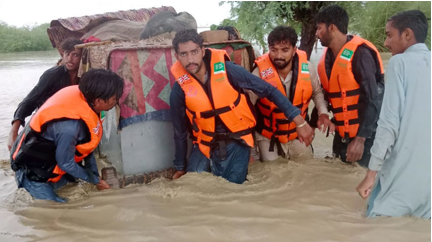
Tariq also highlighted the importance of community-based disaster response, noting that neighbours, local elders and informal community networks are often the first responders long before formal institutions arrive on the scene.
Drawing on China’s community-level approach, he recommended establishing structured volunteer networks at the union council level and providing regular training in search and rescue, first aid and hazard awareness.
Credit: INP-WealthPk