


INP-WealthPk
China’s AI weather push could strengthen Pakistan’s disaster preparedness
April 29, 2026
By Azam Tariq
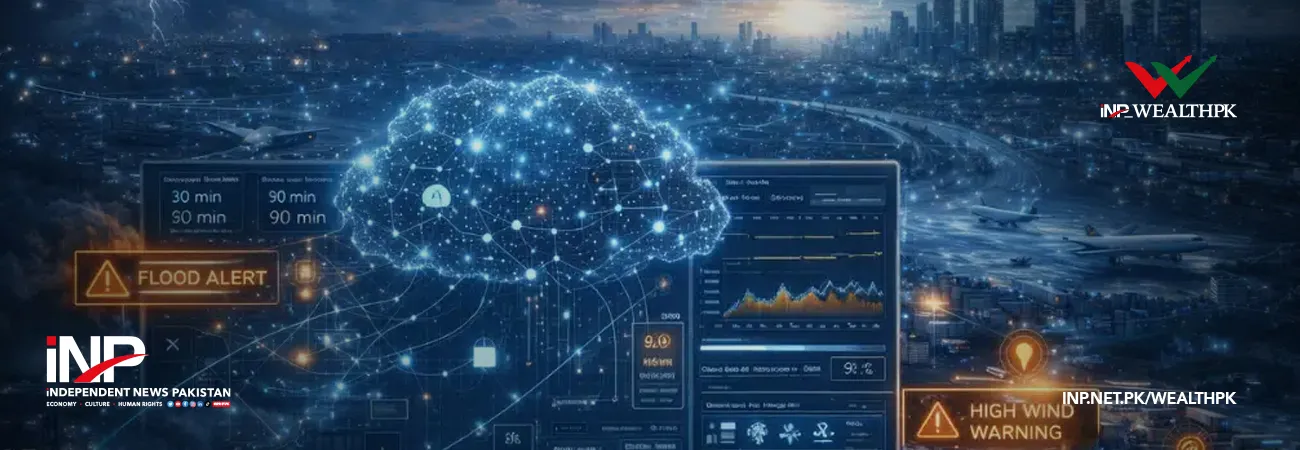
China’s expanding artificial intelligence-driven meteorology initiative across Belt and Road countries could significantly improve Pakistan’s disaster preparedness by enabling faster, more localised forecasts and helping reduce economic losses from floods, droughts and erratic monsoons.
China has also focused on building human capacity. According to China Daily, 20 Pakistani meteorological officials, experts and engineers attended a Beijing workshop in 2024 on a cloud-based early warning system designed to strengthen Pakistan’s capabilities in observation, forecasting and disaster reduction.
Pakistan’s vulnerability underscores the urgency of such advancements. According to the World Bank, climate- and weather-related disasters caused $29.3 billion in economic losses in Pakistan between 1992 and 2021. The 2022 floods alone resulted in $14.9 billion in damage and $15.2 billion in losses.
At the diplomatic level, Pakistan’s Foreign Office said in January 2026 that Islamabad and Beijing had agreed to implement the 2025–2029 bilateral action plan and deepen cooperation in information technology, science and technology.
Speaking with Wealth Pakistan, Bilal Janjua, vice president of the Pak-China Commerce Alliance International, said the effectiveness of AI-powered forecasting would depend on the strength of Pakistan’s underlying data systems.
He explained that such systems require reliable historical records as well as real-time data linkages from observation points across the country to generate accurate predictions. Pakistan, he said, needs to strengthen its weather data infrastructure and move toward establishing a dedicated AI and data centre supported by skilled professionals.
Muneeb Tariq, a PhD researcher at the University of Lincoln, UK, said the strongest economic case for AI-based forecasting lies in the additional lead time it can provide.
“For farmers in Sindh or families living in riverine areas of Khyber Pakhtunkhwa, receiving a warning 72 hours in advance rather than 12 can mean the difference between protecting a harvest and losing it, or between an orderly evacuation and a sudden emergency,” he said.
He noted that Pakistan’s diverse topography often limits conventional forecasting accuracy, whereas AI systems trained on high-resolution satellite and sensor data can detect localised patterns that traditional models may miss.
Tariq added that the broader opportunity lies in integrating forecasting outputs into governance systems. AI-generated forecasts, he said, should feed into the National Disaster Management Authority, provincial disaster management authorities, agriculture extension services, infrastructure planning units and the Planning Commission of Pakistan.
Such integration would allow Pakistan to embed climate risk into routine policy decisions rather than treating it solely as an emergency response issue.
He further said improved weather intelligence could support multiple economic sectors simultaneously. In agriculture, it can guide sowing decisions and irrigation planning. In infrastructure, it can influence the design and placement of roads, bridges and power systems. In water management, better glacier and snowmelt modelling in the Karakoram and Hindu Kush ranges could improve downstream planning across the Indus basin.
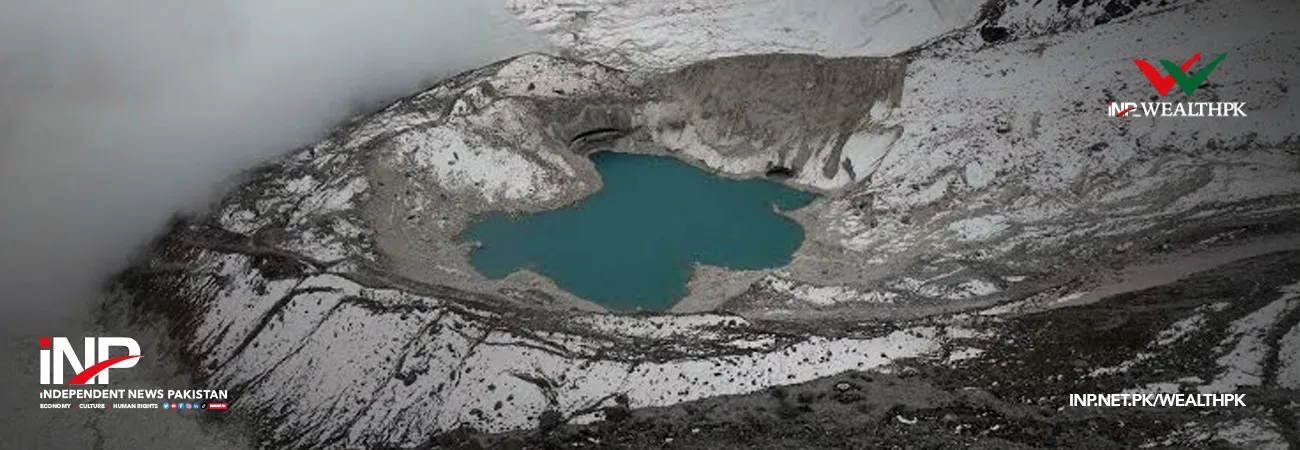
A 2025 article by the World Meteorological Organization cited Dr Chen Zhenlin, administrator of the China Meteorological Administration, as saying that a joint MAZU platform has already been established with the Pakistan Meteorological Department, incorporating tools such as a Glacial Lake Outburst Flood early warning system.
As Pakistan and China deepen cooperation under CPEC 2.0, AI-driven weather forecasting offers a practical and high-impact avenue to strengthen climate resilience. However, translating this potential into real-world protection will depend on Pakistan’s ability to invest in data systems, institutional coordination and timely decision-making frameworks.
Credit: INP-WealthPk