



INP-WealthPk
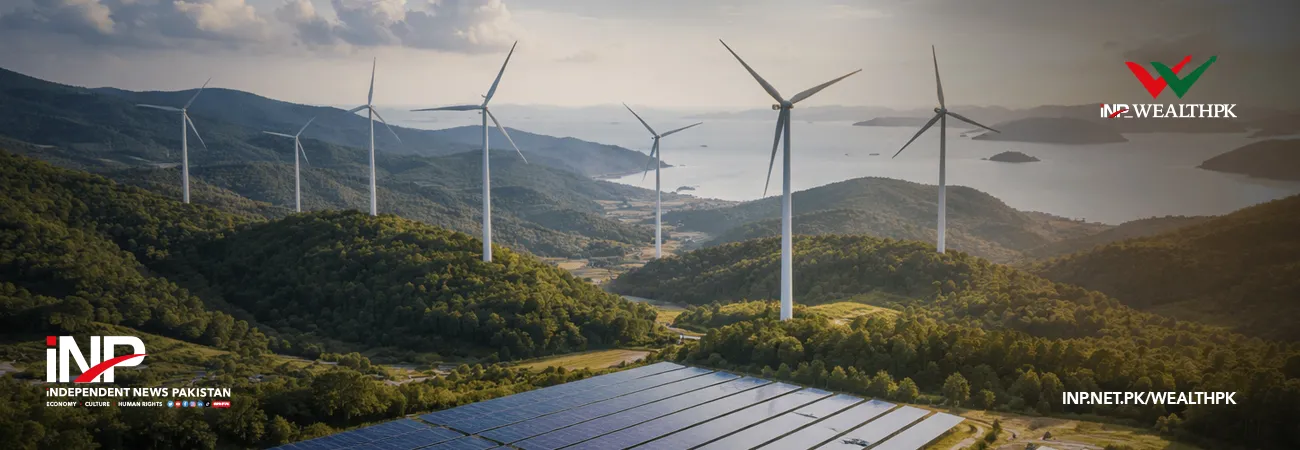
China-Pakistan joint lab to boost energy storage, grid innovation under CPEC
April 29, 2026
By Hasan Salahuddin
Pakistan and China have established a joint research laboratory to advance energy storage and grid integration technologies, a move that could help address Pakistan’s long-standing challenges in renewable energy deployment and system stability.
The Wuhan City (China-Pakistan) Joint Laboratory for Extreme-Environment New Energy Storage and Grid Connection Technology was launched on April 6, 2026, through collaboration between the University of Wah and Hubei University, under the Belt and Road Initiative. The initiative aligns with the broader framework of the China-Pakistan Economic Corridor to promote innovation in photovoltaics, advanced batteries and green hydrogen, particularly for use in harsh operating environments.
China brings significant experience to the partnership. According to the National Energy Administration, the country’s renewable energy capacity reached 2.34 billion kilowatts by the end of 2025, accounting for about 60% of total installed capacity. Wind and solar alone contributed 1.84 billion kilowatts, surpassing thermal power for the first time.
The International Energy Agency estimates that China accounts for around 85% of global solar manufacturing capacity and 80% of lithium-ion battery supply chains, providing Pakistani researchers access to advanced expertise in storage, grid balancing and commercialization.
For Pakistan, the key challenge lies not only in expanding generation capacity but in improving system efficiency. According to the Pakistan Economic Survey, installed electricity generation capacity reached 46,605MW by March 2025. Hydel, nuclear and renewables accounted for 44.3% of capacity and 53.7% of generation during July–March FY2025.
However, the National Electric Power Regulatory Authority has highlighted persistent constraints in renewable integration, including transmission bottlenecks, intermittency, limited storage capacity and delays in evacuation infrastructure. As a result, renewable plants operate at an average utilisation rate of just 36.6%.
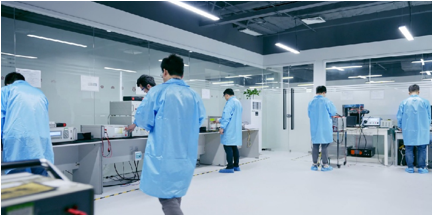
Within this context, the joint laboratory is expected to serve as a practical platform for research on energy storage, grid connectivity and green hydrogen, with potential applications for improving Pakistan’s energy security.
Dr. Fazal Muhammad, Assistant Professor at Balochistan University of Information Technology, Engineering and Sciences, said joint research can accelerate Pakistan’s transition toward clean energy by combining China’s technological maturity with Pakistan’s resource potential.
He noted that collaborative work in solar photovoltaics, wind forecasting and advanced transmission systems can help Pakistan move beyond importing technology toward developing local manufacturing capabilities. Pakistan, he added, has strong solar, wind and hydropower potential but faces persistent challenges in grid stability and storage capacity.
Dr. Husan Ali, Assistant Professor at Air University Kamra, said the laboratory could support Pakistan’s clean-energy ambitions through three key channels. It can help localise technologies suited to Pakistan’s grid conditions and climate, build human capital through direct knowledge transfer, and enable early adoption of emerging technologies such as advanced photovoltaics and high-density batteries.
He emphasised that the initiative should be seen not just as a symbol of cooperation but as a tool for building a resilient and indigenous energy ecosystem.
Muhammad Usman Bin Ahmed, Energy Transition Officer at Alternate Development Services, said the collaboration could help shift Pakistan’s focus from simply adding generation capacity to optimising system performance.
He explained that Pakistan’s energy challenge now lies in making renewable power reliable and compatible with a stressed grid system. Research on storage and grid integration is therefore critical, particularly given local operating conditions such as high temperatures, dust and voltage instability.
He added that the laboratory’s impact will depend on its ability to move beyond academic exchange toward applied solutions, including pilot projects with distribution companies, regulators and industry stakeholders.
Experts say such collaboration can improve grid reliability, reduce dependence on imports and support the alignment of renewable expansion with broader energy reforms.
As Pakistan deepens cooperation with China under CPEC, initiatives focused on research and technology development are expected to play an increasingly important role in strengthening long-term energy resilience and sustainability.
Credit: INP-WealthPk