



INP-WealthPk
China approves 2026–2030 blueprint to drive next phase of modernization
March 16, 2026
By Farooq Awan
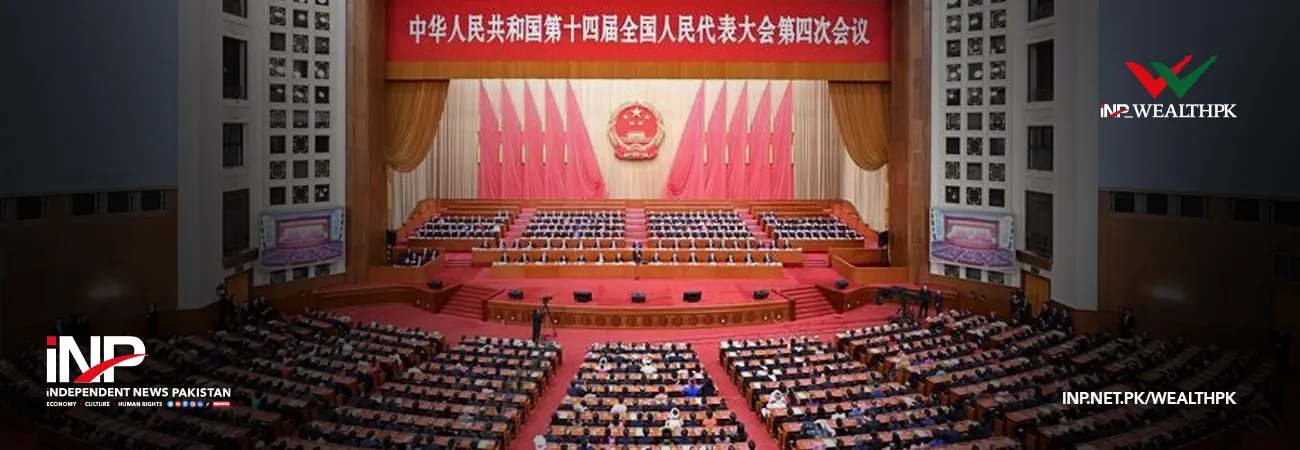
China’s national lawmakers have approved a development blueprint for the 2026–2030 period, outlining a roadmap aimed at advancing modernization and high-quality development. The outline of the 15th Five-Year Plan (2026–2030) for national economic and social development was approved during the annual legislative session in Beijing.
The plan sets a range of goals covering economic development, innovation, public well-being, green transition and security, with many indicators focused on improving people’s livelihoods. The new blueprint outlines 109 major projects across six key areas, supported by 20 quantified indicators, of which eight are binding targets. These measures are designed to guide development priorities and ensure that the country’s economic transformation is driven by concrete implementation and measurable results during the five-year period.
China has charted its development path through medium- and long-term planning that defines policy direction, development goals and reform priorities. The 2026–2030 blueprint places high-quality development at the center of national strategy, reflecting a shift from the earlier emphasis on speed and scale of growth toward quality, efficiency, sustainability and inclusiveness.
Roadmap toward socialist modernization
The aspiration for modernization has long been a central goal for the Chinese people. After the Opium War of 1840, China faced foreign aggression and economic hardship. The Communist Party of China later undertook the task of exploring a path toward national modernization.
In 2017, the Communist Party of China introduced a two-stage roadmap to achieve that goal. From 2020 to 2035, China aims to basically realize socialist modernization through the implementation of the 14th, 15th and 16th five-year plans.
From 2035 to the middle of this century, the country will strive to build itself into a great modern socialist nation that is prosperous, strong, democratic, culturally advanced, harmonious and beautiful.
The 2026–2030 period is regarded as a key transitional stage in this process. Progress made during these five years will play a decisive role in determining whether China can basically realize socialist modernization by 2035.
Industrial upgrading and innovation push
The plan places strong emphasis on building national strength through industrial and technological development, with manufacturing occupying a central role. China’s manufacturing sector has maintained the world’s largest value-added output for 16 consecutive years.
Building a modern industrial system and strengthening the foundation of the real economy are among the priorities outlined in the blueprint. China plans to upgrade traditional industries toward the mid-to-high end of the value chain, nurture emerging industries and make forward-looking plans for industries of the future.
Innovation occupies a central position in the plan. China aims to increase research and development spending by more than 7 percent annually during the period while raising the share of core digital industries to 12.5 percent of gross domestic product. Priority technologies include semiconductors, quantum computing, sixth-generation (6G) communications and embodied intelligence.
Green transition and sustainable growth
The blueprint also sets targets for environmental transition. China plans to reduce carbon intensity by around 17 percent during the five-year period while increasing the share of non-fossil energy to about one quarter of total energy consumption.
At the same time, the plan highlights the importance of strengthening the domestic economic cycle, placing greater emphasis on domestic consumption, integrated national markets and a resilient industrial base while maintaining openness to global trade and investment.
The blueprint also emphasizes expanding openness and promoting balanced trade. China will continue to improve the quality of foreign trade while expanding opportunities for international cooperation.
“Exports and imports are like the two wheels on a car. The more balanced they are, the more steadily it runs, and the farther it goes,” Minister of Commerce Wang Wentao said at a press conference on the sidelines of the legislative session.
China’s economic performance during the previous five-year plan period was highlighted as evidence of the country’s development momentum. During the 14th Five-Year Plan period (2021–2025), the country’s GDP crossed successive thresholds of 110 trillion yuan, 120 trillion yuan, 130 trillion yuan and 140 trillion yuan, with an average annual growth rate of 5.4 percent, well above the global average.
Over the past several decades, China has undergone a profound transformation, rising from a country once affected by poverty and foreign aggression to the world’s second-largest economy.
The plan also links economic development to improvements in people’s well-being, including higher life expectancy, stronger public services, improved healthcare and expanded urbanization, reflecting a focus on sharing the gains of development more broadly across society.
CPPCC session
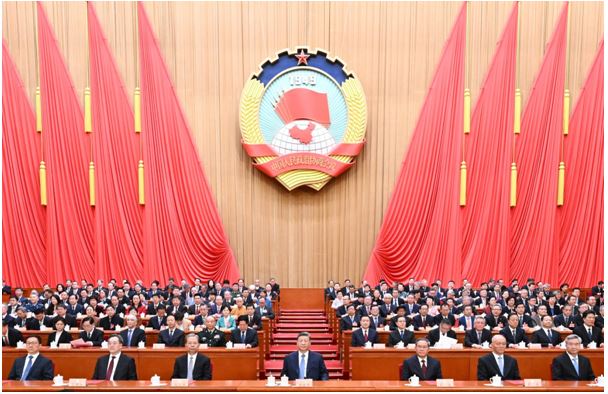
A day earlier, the 14th National Committee of the Chinese People’s Political Consultative Conference (CPPCC), China’s top political advisory body, concluded its annual session in Beijing.
Chinese top leaders including Xi Jinping, Li Qiang, Zhao Leji, Cai Qi, Ding Xuexiang, Li Xi and Han Zheng attended the meeting at the Great Hall of the People. Presiding over the meeting, Wang Huning, chairman of the CPPCC National Committee, said the session had produced fruitful results.
Wang said political advisors had strengthened their determination to contribute to advancing Chinese modernization while supporting the country’s rapid economic growth and long-term social stability.
Noting that 2026 marks the first year of the 15th Five-Year Plan period, Wang said the CPPCC should uphold the leadership of the Communist Party of China, actively provide suggestions on state affairs and pool strength and wisdom to ensure a good start to the new plan.
He also called on political advisors to put forward more proposals that benefit the people and help ensure that the fruits of modernization reach all segments of society.
During the closing meeting, delegates approved several documents, including a resolution on the work report of the Standing Committee of the CPPCC National Committee, a report on how proposals submitted since the previous annual session had been handled, a report on the examination of new proposals and a political resolution of the fourth session of the 14th CPPCC National Committee.
Credit: INP-WealthPk