


INP-WealthPk
Balochistan road projects receive Rs85.49bn in four years
April 20, 2026
By Abdul Ghani
Nine major road projects in Balochistan under the China-Pakistan Economic Corridor (CPEC) have so far utilized Rs85.49 billion out of a total allocation of Rs191.67 billion under the Public Sector Development Program (PSDP) from 2022-23 to 2025-26, according to a document available with Wealth Pakistan.
These projects are in progress in the western zone of Balochistan, with varying levels of financial and physical advancement.
The Khuzdar–Kuchlak N-25 (330 km) project accounts for the largest share, with Rs60.6 billion allocated and Rs28.98 billion spent so far. The Karachi–Kararo & Wadh–Khuzdar N-25 (273 km) and Kararo–Wadh and Kuchlak–Chaman N-25 (187 km) projects have each been allocated Rs33 billion, with expenditures of Rs8.69 billion and Rs7.67 billion, respectively.
The Awaran–Naal M-8 (168 km) section shows notable progress, utilizing Rs19.01 billion out of an allocation of Rs23.03 billion, making it one of the most advanced projects in terms of spending.
The other ongoing schemes include Hoshab–Awaran M-8 (146 km) with Rs5.25 billion spent out of Rs11.29 billion allocated, Nokundi–Mashkel (103 km) with Rs4.85 billion spent from Rs7.36 billion, and Quetta Western Bypass N-25 (22.7 km) where Rs3.27 billion has been utilized against an allocation of Rs5.91 billion.
Similarly, the Basima–Khuzdar N-30 (106 km) project has recorded expenditures of Rs3.66 billion out of Rs5.90 billion, while the Zhob–Kuchlak N-50 (298 km) section has utilized Rs4.11 billion from its Rs11.58 billion allocation.
While allocations remain substantial, disbursement and utilization have been affected by multiple challenges, including land acquisition hurdles, difficult terrain, security concerns, and delays in fund releases.
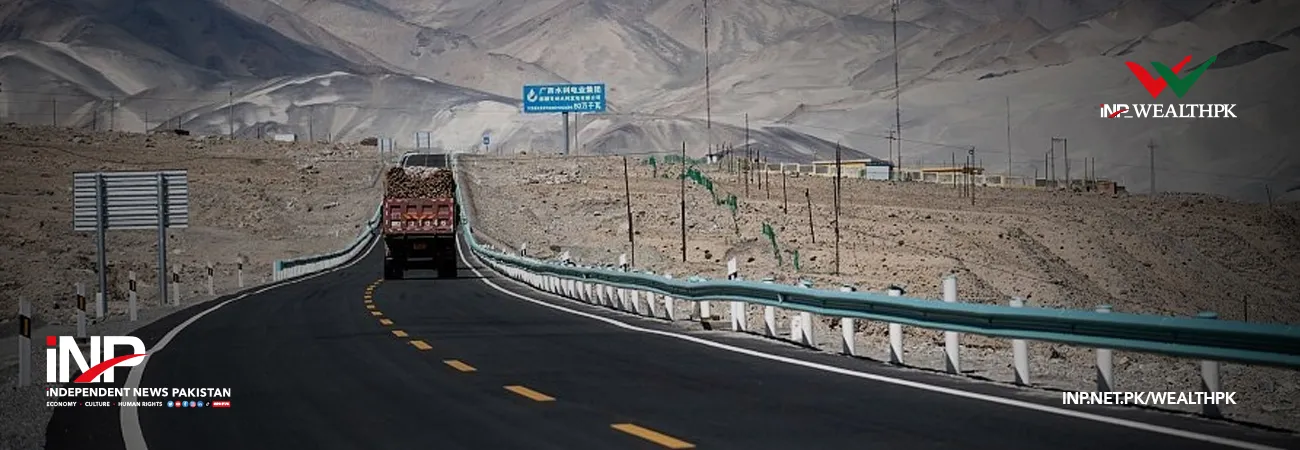
These projects are crucial for enhancing connectivity in Balochistan, particularly along the western route, which is a key component of CPEC.
The improved road networks are expected to facilitate trade, reduce travel time, and promote economic integration of remote regions.
Despite the slower pace of spending, efforts are underway to accelerate implementation and ensure timely completion of these strategically important infrastructure projects.
Credit: INP-WealthPk