



INP-WealthPk
Auto sector supports more than 1.83 million livelihoods across Pakistan’s economy
March 06, 2026
By Ayesha Saba
Pakistan’s automobile industry supports more than 1.83 million livelihoods across the country, reflecting the sector’s significant role in employment generation and its extensive linkages with multiple allied industries.
The sector’s employment impact extends well beyond vehicle assembly plants and includes a wide network of suppliers, service providers, and support industries, according to a study on Pakistan’s automobile industry prepared by the Centre of Excellence in Competition Law at the Competition Commission of Pakistan.
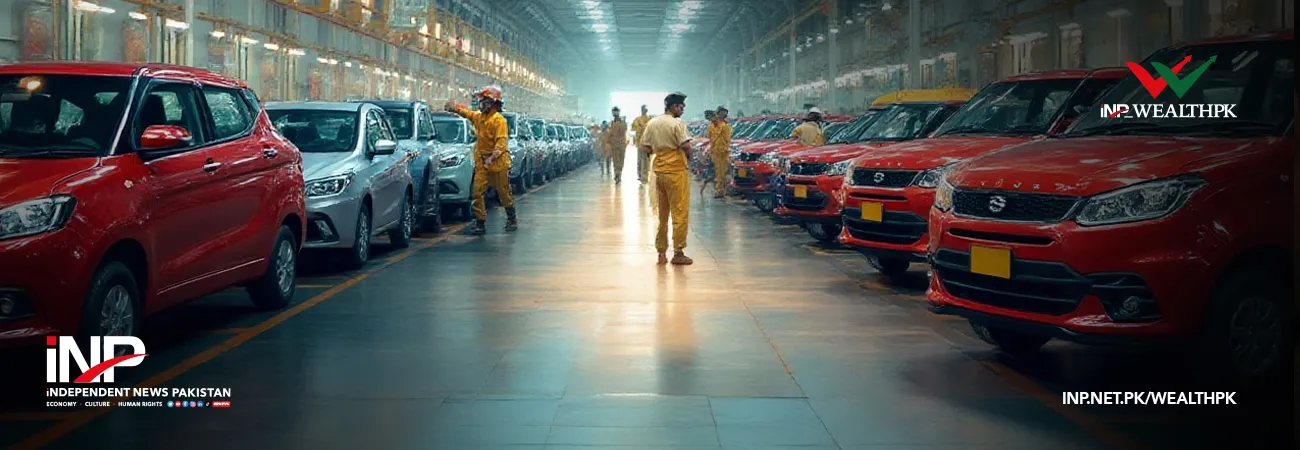
The study notes that around 215,000 people are directly employed in automobile and auto-parts manufacturing. These jobs include workers in vehicle assembly plants, component manufacturing facilities, engineering operations, quality control systems, and technical services associated with automotive production.
In addition to direct employment, the automobile sector sustains a much larger workforce across allied industries, bringing total livelihoods linked to the automotive ecosystem to approximately 1.83 million.
The report highlights that the automotive ecosystem spans a broad range of industries, including steel production, plastics manufacturing, electronic components, rubber products, glass manufacturing, and specialized mechanical engineering services. These industries supply essential materials and parts used in vehicle production.
The transportation and distribution sectors also benefit significantly from automotive activity. Vehicle dealerships, repair workshops, spare-parts retailers, and logistics providers are among the many businesses that rely on the automobile market for their operations.
Because of these extensive industrial linkages, employment generated by the automobile sector spreads across both formal and informal segments of the economy. Workers engaged in assembly operations, vendor industries, maintenance services, and transport activities form part of the wider employment chain created by the automotive industry.
The study explains that automobile manufacturing requires complex production processes involving skilled and semi-skilled labour across multiple stages of industrial activity. Vehicle production involves hundreds of components, including engines, transmissions, braking systems, electrical wiring, interior components, and structural parts.
The manufacturing and supply of these components create additional employment opportunities for local vendors and specialized suppliers while encouraging the development of technical skills within the workforce.
The report notes that the expansion of the automobile market also supports jobs in retail and after-sales services, including vehicle dealerships, spare-parts supply chains, maintenance services, and inspection facilities.
By generating direct employment in manufacturing while supporting a wide network of supplier and service industries, Pakistan’s automobile sector acts as an important employment multiplier within the country’s industrial economy.
Credit: INP-WealthPk