


INP-WealthPk
Asia’s trade surge offers Pakistan opportunity, but structural gaps remain
April 29, 2026
By Qudsia Bano
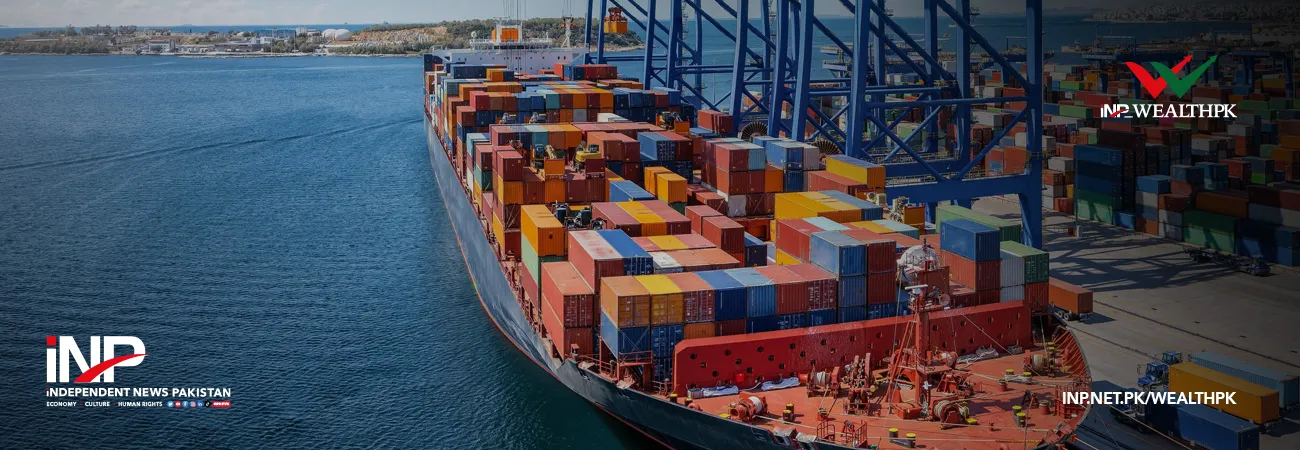
Pakistan could benefit from Asia’s expanding dominance in global trade, as regional economies accounted for nearly three-quarters of global trade growth in 2025, reshaping supply chains and creating new openings for emerging exporters.
According to recent global trade data compiled by the World Trade Organization, Asian economies contributed 3.2 percentage points out of a total 4.6 percentage point increase in world trade volume, representing about 71 per cent of overall growth. The expansion has been supported by strong demand in emerging markets, policy support in advanced economies, and a surge in investment in technology-driven sectors, particularly those linked to artificial intelligence.
A defining feature of this trend is the sustained strength of Asian exports. China’s export volumes grew by more than 9 percent, while economies such as Singapore and Thailand recorded double-digit increases, reflecting broad-based resilience across the region. This performance has reinforced Asia’s position as the primary engine of global trade growth at a time when other regions are experiencing comparatively slower recovery.
Pakistan’s geographic and economic positioning within Asia places it in a potentially advantageous position to tap into these shifts. As multinational firms continue to diversify supply chains and reduce reliance on single-country sourcing, emerging economies are increasingly being considered as alternative production bases. Economists say Pakistan, with its proximity to major Asian exporters and access to key maritime routes, could integrate more effectively into regional value chains with sustained policy support.
At the same time, Pakistan’s export structure is gradually evolving in response to changing global demand patterns. While textiles remain the backbone of exports, other sectors — including information technology, pharmaceuticals, agriculture, and light engineering — are gaining traction. In particular, IT exports have shown steady growth in recent years, reflecting the country’s expanding services footprint in global markets. Trade with regional economies is also increasing, pointing to a gradual shift toward intra-Asian and South-South trade linkages.
However, global economic conditions continue to present uncertainties. Earlier projections had placed global GDP growth at around 2.8 per cent for 2026 and 2027, but rising energy prices and geopolitical tensions have introduced downward pressure, with growth now expected to moderate to around 2.5 percent in 2026. A slower global economy could weaken import demand, potentially limiting export gains, although Asia’s strong trade momentum is expected to provide some cushion.
Saad Ahmed, a trade policy researcher at the Social Policy and Development Centre, said Asia’s dominance in global trade growth presents a strategic opportunity for Pakistan to reposition its export strategy. He noted that countries benefiting most from this shift are those that have successfully integrated into regional production networks and improved trade facilitation mechanisms.
He added that Pakistan can capitalise on this momentum by enhancing connectivity, simplifying export procedures, and aligning its industrial policy with evolving regional demand. According to him, targeted support for high-potential sectors, coupled with improvements in logistics and infrastructure, will be essential to fully benefit from Asia’s trade expansion.
Nida Farooq, an economist at the Pakistan Institute of Development Economics, said the ongoing shift toward Asia is creating both opportunities and competitive pressures for emerging economies. She explained that as larger Asian economies expand production, demand for intermediate goods and services is also increasing, opening space for smaller economies to participate in supply chains.
She emphasised that Pakistan’s ability to benefit from these developments will depend on maintaining macroeconomic stability and ensuring consistency in trade and industrial policies. Investments in technology, skills development, and export diversification, she noted, will play a critical role in enabling the country to integrate into evolving global trade networks.
Despite the positive outlook, structural challenges continue to constrain Pakistan’s export potential. Issues such as high production costs, energy constraints, limited product diversification, and regulatory bottlenecks remain key impediments to competitiveness. In addition, reliance on a narrow export base leaves the country vulnerable to external shocks and shifts in global demand.
Economists believe that the ongoing transformation in global trade patterns represents a long-term structural shift rather than a temporary trend. As Asia continues to anchor global commerce, countries that align their policies with regional dynamics and strengthen their production capabilities are likely to capture a larger share of global trade.
For Pakistan, the current phase presents a critical window to expand its export base, deepen regional trade integration, and strengthen its position within Asia’s evolving economic landscape. However, realising this potential will depend on sustained reforms, improved competitiveness, and the ability to translate emerging opportunities into tangible export growth.
Credit: INP-WealthPk