


INP-WealthPk
Absence of vehicle scrappage policy keeps old, high-emission cars on Pakistan’s roads
March 06, 2026
By Moaaz Manzoor
The absence of a structured vehicle scrappage policy in Pakistan has allowed old and high-emission vehicles to remain in circulation, contributing to environmental challenges and affecting the modernization of the country’s automobile fleet.
Pakistan currently lacks a formal mechanism for systematically phasing out outdated vehicles that no longer meet modern environmental and safety standards, according to a study on Pakistan’s automobile industry conducted by the Centre of Excellence in Competition Law at the Competition Commission of Pakistan.
The report notes that in many countries vehicle scrappage programs are used as policy tools to remove aging vehicles from roads and replace them with newer, more efficient models. Such programs typically involve incentives that encourage vehicle owners to retire old automobiles and shift to newer vehicles.
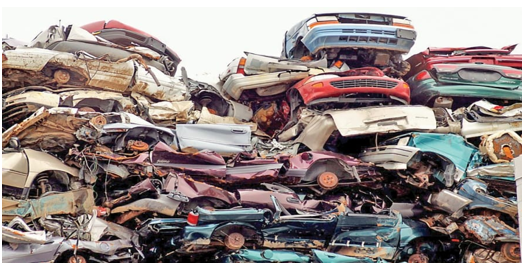
In Pakistan, however, the absence of such a structured policy means that vehicles often remain in operation for extended periods even after they become inefficient or environmentally harmful.
The study highlights that older vehicles generally produce higher emissions compared with modern vehicles equipped with improved engine technologies and emission control systems.
As a result, the continued use of aging vehicles contributes to environmental pressures, particularly in large urban centers where air quality is already under strain.
Urban areas in Pakistan have experienced rising concerns regarding air pollution, and the persistence of older vehicles on the roads adds to this challenge.
The report explains that a structured scrappage policy could support both environmental objectives and industrial development by encouraging the gradual replacement of older vehicles with newer models.
Such a policy could create additional demand for new vehicles, which in turn would support domestic automobile manufacturing and related industries.
The automobile sector is closely linked with several manufacturing and service industries, including auto parts production, metal processing, plastics manufacturing, and vehicle maintenance services.
An increase in demand for new vehicles can therefore stimulate activity across these interconnected sectors.
The study also notes that the modernization of the vehicle fleet has implications for road safety. Older vehicles often lack advanced safety features that are commonly available in newer models.
Replacing outdated vehicles with modern automobiles equipped with improved safety technologies can contribute to safer road conditions.
In addition, the transition toward cleaner vehicle technologies, including hybrid and electric vehicles, requires a gradual replacement of older vehicles currently operating with conventional engine systems.
Without a policy framework encouraging the retirement of aging vehicles, the transition to cleaner mobility technologies may proceed more slowly.
The report indicates that the introduction of a structured vehicle scrappage and recycling mechanism could help align environmental, industrial, and transportation objectives.
Such a framework could provide incentives for vehicle replacement while establishing procedures for environmentally responsible disposal and recycling of old vehicles.
The study states that addressing the issue of aging vehicles remains an important consideration for Pakistan’s automobile sector as the country seeks to modernize its transportation system and improve environmental conditions in urban areas.
Credit: INP-WealthPk