

i INP-WEALTHPK
China’s clean transport push offers roadmap for Pakistan’s low-emission mobilityتازترین
March 26, 2026
By Azam Tariq
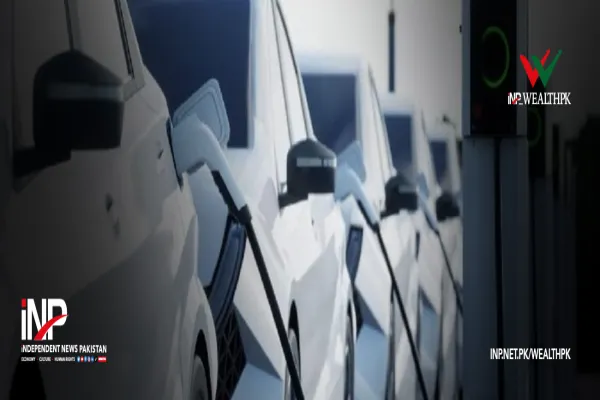
China’s transport agenda under the 15th Five-Year Plan (2026–2030) offers a roadmap for Pakistan to develop a low-emission mobility system by linking electric vehicles, energy systems and infrastructure development into a unified transition strategy. According to China’s 2026 government work report, output of new-energy vehicles exceeded 16 million in 2025, while EV charging facilities topped 20 million. Charging coverage at expressway service areas has reached 98.8%, and the national comprehensive three-dimensional transport network is now over 90% complete, with a target of exceeding 95% during 2026–2030. The system is already handling massive volumes, including around 550 million parcels daily.
China is now moving into the next phase by linking transport decarbonisation with smart grids, green power transmission, hydrogen use, energy storage and zero-carbon industrial parks, reflecting a whole-of-economy approach rather than a vehicle-only policy. Ebadat Ur Rehman Babar, Associate Researcher at the Sustainable Development Policy Institute, told Wealth Pakistan that China’s approach provides an important reference point for Pakistan’s transition to low-carbon mobility. He said the opportunity is becoming more relevant under CPEC 2.0, where innovation, green development and industrial cooperation are gaining momentum.
Babar said the key lesson is that transport reform becomes more effective when it is integrated with energy systems, industrial upgrading and urban planning. He noted that Pakistan’s immediate priority should be to translate policy into implementation. While the National Electric Vehicle Policy provides a framework, progress on the ground remains limited. Instead of attempting rapid electrification across all segments, he suggested focusing on areas with early scalability, particularly two- and three-wheelers and urban public transport fleets.
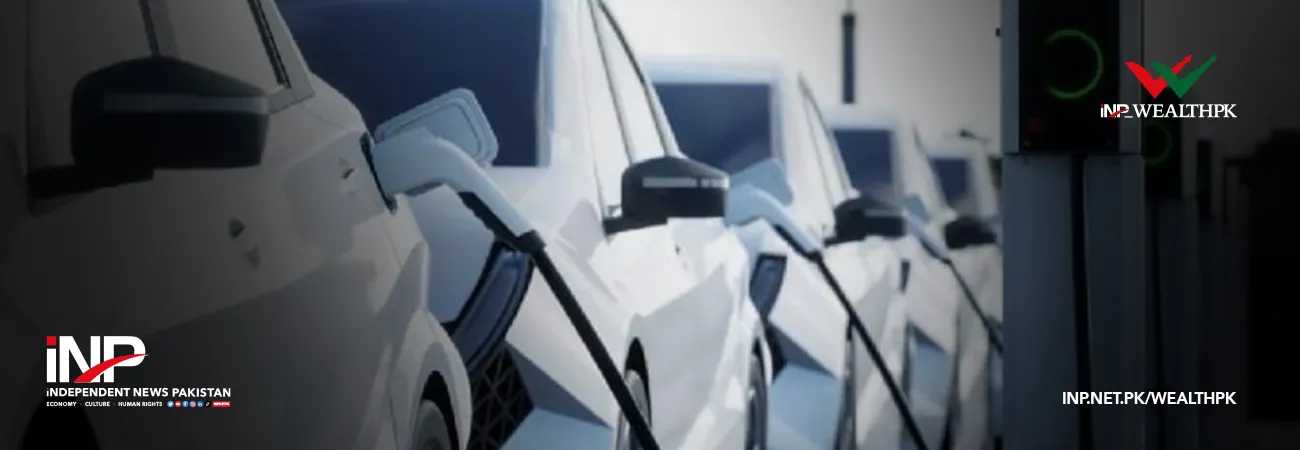
China’s policy direction also includes pilot projects to expand battery charging and swapping facilities at the county level and strengthen rural charging infrastructure to support wider adoption of new-energy vehicles. Babar said Pakistan should adopt a phased and demand-driven approach to charging infrastructure. He noted that charging stations should not be limited to fuel stations but developed in locations where vehicles remain parked longer, such as shopping centres, offices, hospitals and residential complexes. He also recommended corridor-based fast chargers along major highways, urban charging hubs, public-private partnerships and building regulations that require dedicated EV charging spaces.
He added that Pakistan can draw from China’s broader model as it modernises urban transport systems, pointing to electric bus projects already introducing GPS-based fleet monitoring, automated fare collection and real-time passenger information in several cities. Talha Tufail Bhatti, Assistant Research Officer at the Institute of Regional Studies, said Pakistan cannot sustain an EV transition while relying heavily on imported batteries and components. He said strengthening supply chain capacity is essential, including the ability to source, assemble and eventually manufacture key components locally.
Without this base, he warned, large-scale EV adoption will remain vulnerable to cost pressures and external dependence. On infrastructure, Bhatti said Pakistan must look beyond simply increasing the number of charging stations. He emphasised the need to decentralise the power grid to make EV charging more reliable across cities and transport corridors.
He said one of the key challenges is not just the number of charging points but the energy security required to support them. A more resilient and decentralised grid would make EV adoption more practical for everyday use. China’s plan highlights accelerated development of smart grids, expanded use of green electricity and support for low-carbon technologies, reinforcing the importance of integrating transport with broader energy systems.
Bhatti said Pakistan has the potential to build a cleaner and smarter transport system, but this will require sustained commitment and long-term planning. “These are not short-term projects. Meaningful change may take 20 to 30 years before Pakistan can establish a reliable EV infrastructure,” he said. Experts said China’s transport strategy shows that successful transition depends on sequencing, integration and long-term investment.
They said Pakistan does not need to match China’s scale but can adapt its approach by aligning transport policy with energy, industry and urban development. With CPEC 2.0 offering a platform for green cooperation, experts said Pakistan can build a cleaner, more efficient and economically beneficial transport system by adopting a coordinated and phased transition strategy.

Credit: INP-WealthPk
متعلقہ خبریں