



i NEWS PAK-CHINA
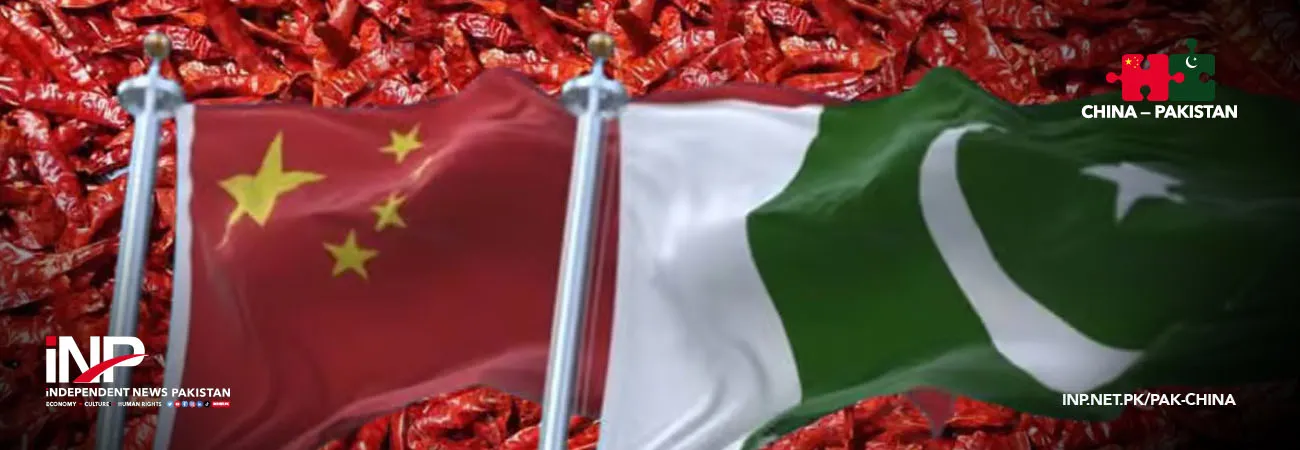
Pakistan dried chili shipment opens new trade route to SW ChinaBreaking
September 08, 2026
More than 80 metric tons of high-quality dried chilies from Pakistan have arrived at Chengdu International Railway Port, opening a new cross-border logistics route for agricultural products and giving fresh impetus to China-Pakistan agricultural and trade cooperation.
The shipment, comprising eight containers, entered China through Qinzhou Port in Guangxi Zhuang Autonomous Region before being transported to Chengdu by sea-rail intermodal service under the New International Land-Sea Trade Corridor, China Economic Net (CEN) reported on Tuesday.
It is the first shipment to arrive in China under an agricultural cooperation project associated with the China-Pakistan Economic Corridor.
The new route is expected to improve the efficiency of chili transportation to southwest China.
Unlike traditional routes, which typically bring imported chilies through northern ports before distributing them to markets across the country, the new service transports the cargo directly from Qinzhou Port to Chengdu.
According to Chengdu International Railway Port Economic and Technological Development Zone Construction and Development Co., Ltd., the route can reduce overall logistics costs by about 1,000 yuan ($140) per metric ton and cut transit times by seven to 10 days.
Following the arrival of the first eight containers, more than 900 metric tons of additional Pakistani dried chilies are being shipped, with the service expected to move toward regular operations.
Chengdu International Railway Port is seeking to leverage its transportation advantages to expand trade and support industrial development.
As a key node linking the New International Land-Sea Trade Corridor with China-Europe freight train services, the port provides facilities for cross-border logistics, bonded warehousing, distribution and trade.
"China has three major chili distribution centers in Qingdao, Henan and Guizhou, while Sichuan and Chongqing, despite being major consumer markets, have long lacked a specialized, large-scale distribution hub," said Li Jiarun, head of trade business at the development company.
The imported Pakistani chilies are being supplied to downstream industries, including major catering companies such as Haidilao, local hotpot restaurants and condiment producers, including manufacturers of Pixian Douban.
The project is helping build an integrated supply chain covering overseas cultivation, cross-border transportation, distribution, processing and final consumption.
For Pakistan, the new route provides an additional channel for agricultural products to reach the Chinese market.
For southwest China, it offers a more direct supply of imported chilies to the region's growing hotpot, condiment and food-processing industries.
The arrival of the Pakistani dried chilies marks another step in turning international transport corridors into platforms for trade and industrial cooperation, while strengthening links between Pakistani agricultural producers and China's regional food industry.
Credit: Independent News Pakistan (INP) — Pak-China
Related News