

i NEWS PAK-CHINA
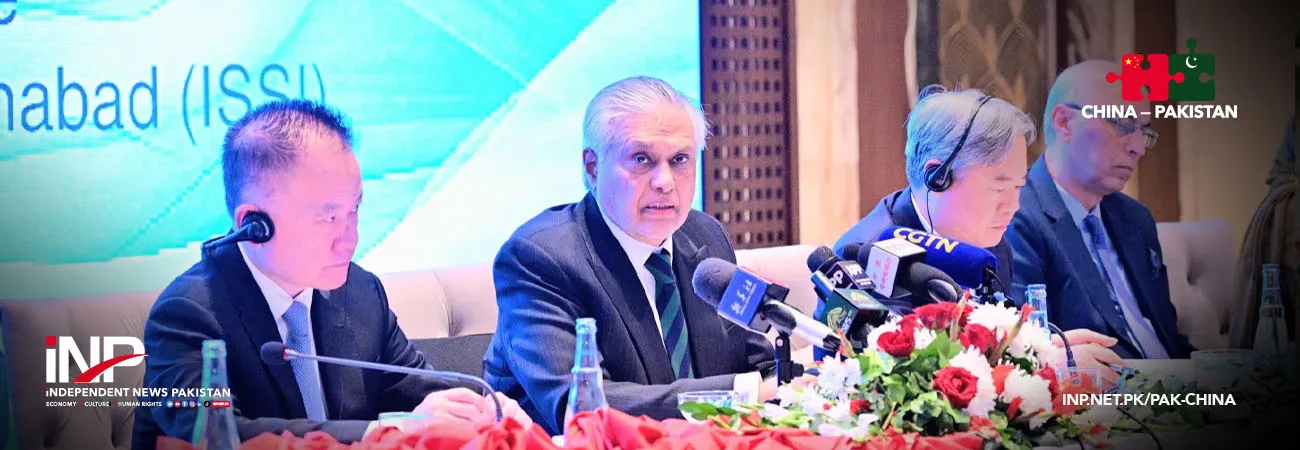
Dar, Liu Haixing Co-Chair Pakistan-China Governance SymposiumBreaking
November 05, 2026
Pakistan and China on Monday reaffirmed their commitment to strengthening political party exchanges and governance cooperation, with senior leaders highlighting institutional development, accountability, people-centred policies and long-term development planning.
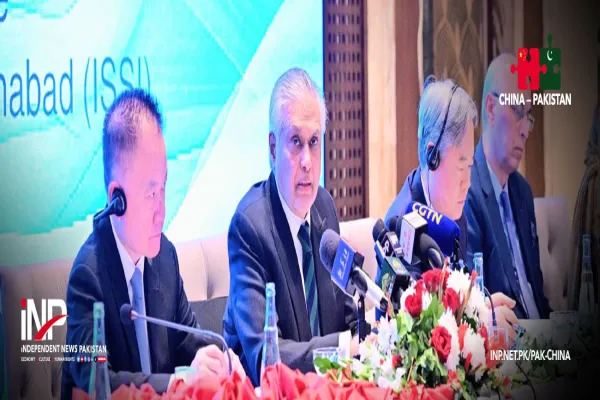
The Symposium on Xi Jinping Thought on Party Building and Pakistan-China Seminar on Governance was co-chaired by Deputy Prime Minister and Foreign Minister Mohammad Ishaq Dar and Liu Haixing, Minister of the International Department of the Communist Party of China (CPC) Central Committee.
Addressing the symposium, organized by the Institute of Strategic Studies Islamabad (ISSI) and the Chinese Embassy in Islamabad, Liu said the CPC’s experience in governance and party building offered theoretical and practical insights.
He highlighted the importance of ideological unity, strategic direction, organizational discipline and placing people at the centre of policymaking.
He said the CPC had strengthened its self-governance and anti-corruption efforts while pursuing development aimed at improving people’s lives. Liu added that China neither sought to export its governance model nor asked other countries to copy it, but supported dialogue and mutual learning through party-to-party exchanges.
Dar highlighted China’s development under the CPC, citing discipline, anti-corruption measures and people-centred governance as important elements of its experience.
He said Pakistan was pursuing governance reforms, institutional modernization and economic transformation, while the two countries continued to deepen their all-weather partnership.
Dar said the key recommendations for strengthening governance cooperation could be consolidated into five broad areas: strengthening political party organizations, internal cohesion and connections with local communities; advancing long-term, high-quality development and modernization; building public trust through improved public services and ensuring development benefits reach ordinary people; combating corruption and promoting accountability in the use of public office; and fostering inter-party respect, non-interference, cooperation and mutual learning among political parties.
In a message on behalf of President Asif Ali Zardari, Senator Sherry Rehman highlighted China’s institutional strength and social transformation, as well as its focus on education, technology and innovation.
She said Pakistan could learn from China’s development experience while adapting lessons to its own circumstances.
Rehman said the China-Pakistan Economic Corridor (CPEC) remained central to bilateral cooperation, with its next phase expected to focus on agricultural modernization, industrialization, job creation and sustained political commitment.
In a message from Prime Minister Shehbaz Sharif, read by Dar, the premier said countries of the Global South could draw lessons from the CPC’s governance experience while pursuing development paths suited to their own national conditions.
He highlighted the importance of party-level consultations and cooperation under CPEC 2.0, particularly in agriculture, artificial intelligence, industrialization and green energy. The message also referred to Chinese President Xi Jinping’s Global Development Initiative, Global Security Initiative and Global Governance Initiative.
Planning Minister Ahsan Iqbal said the CPC’s grassroots structures, leadership training and continuity in development planning offered lessons for Pakistan. He referred to China’s poverty alleviation achievements and said Pakistan needed greater policy continuity, accountability and the development of new leadership.
Iqbal said CPEC had been launched at a time when Pakistan was facing serious security, electricity and investment challenges, and stressed the importance of sustained cooperation to support the country’s development.
The symposium underscored the importance of sustained political exchanges, institutional cooperation and mutual learning in strengthening Pakistan-China relations and advancing shared development objectives.
Credit: Independent News Pakistan (INP) — Pak-China
Related News