


i NEWS PAK-CHINA
CPEC projects' development get accelerated across BalochistanBreaking
December 12, 2025
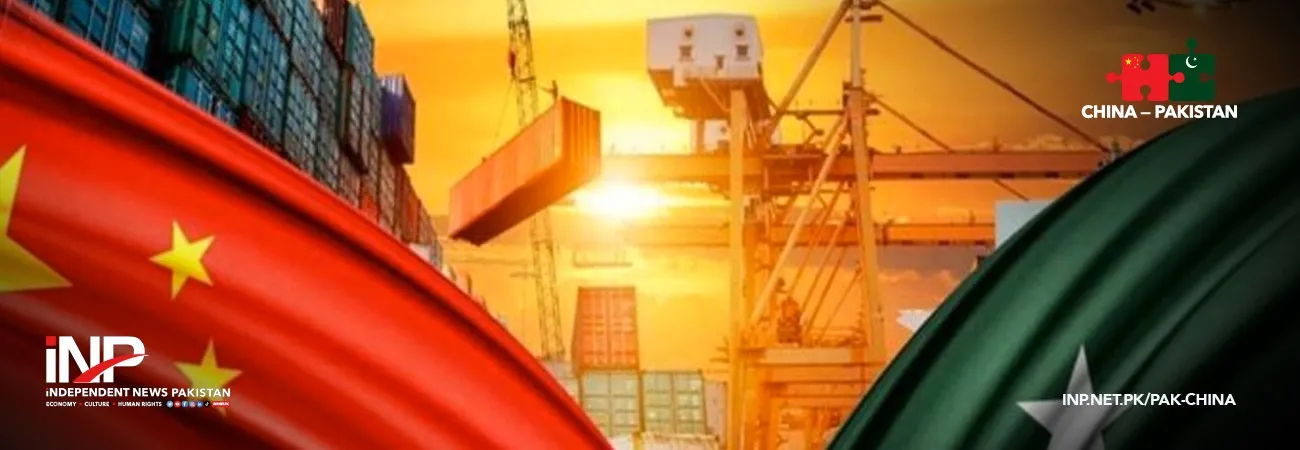
Balochistan’s development landscape is witnessing major transformation under the China-Pakistan Economic Corridor (CPEC), with substantial progress recorded in energy generation, road connectivity, industrial zones and community uplift initiatives. According to official documents, several large-scale projects, funded through a combination of grants, Build-Operate-Transfer (BOT) models, Public Sector Development Programme (PSDP) financing and Chinese investments, have reached completion or are advancing rapidly, cementing CPEC’s role as the main driver of regional development.
According to Gwadar Pro, among the flagship energy achievements is the successful completion of the 1,320MW China Hub Coal Power Plant, a USD 1.9 billion Independent Power Producer (IPP) initiative providing essential baseload power to the national grid. Complementing this is the ongoing 300MW Gwadar Coal Power Project, a USD 542 million investment designed to stabilize power supply to Gwadar and surrounding districts.
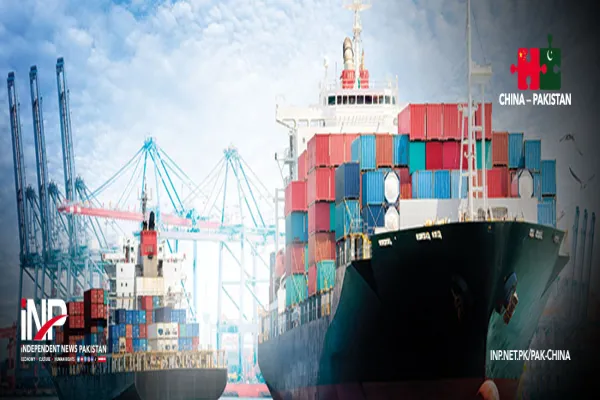
Connectivity infrastructure, critical for boosting trade, logistics and socioeconomic integration, is another area witnessing fast-paced development. Projects completed across the province including Eastbay Expressway Phase-I (USD 179 million), enhancing connectivity of Gwadar Port, Khuzdar–Basima Road (110 km) worth USD 118 million, New Gwadar International Airport, a landmark USD 230 million Chinese grant and Gwadar Port and Free Zone, a USD 300 million BOT investment that has significantly improved Pakistan’s maritime trade capabilities.
Socioeconomic uplift remains central to CPEC’s development strategy. Completed grant-based initiatives include Gwadar Smart Port City Master Plan (USD 4 million), Freshwater treatment and supply schemes (USD 130 million), Pak-China Friendship Hospital (USD 100 million), Technical and Vocational Institute Gwadar (USD 10 million), 1.2 MGD Gwadar Desalination Plant (USD 13.97 million) and Provision of 15,000 solar lighting units for underserved communities.
Under-construction connectivity projects, critical for unlocking Balochistan’s economic potential, include Awaran–Naal Road (168 km), cost USD 107 million, Nokundi–Mashkhel Road (103 km), USD 47 million, Hoshab–Awaran Section of M-8 (146 km), USD 161 million and Zhob-Quetta Road (298 km), USD 391 million. Work is also underway on Gwadar Free Zone Phase-II, with an estimated BOT investment of USD 285 million.
Industrial development is progressing through the Bostan Special Economic Zone (SEZ), supported by USD 9 million in PSDP financing, while large-scale social initiatives include a burns centre and rehabilitation support for 36,000 flood-damaged homes. Upcoming mega projects, such as the Quetta Mass Transit Project and major expansions of Gwadar port infrastructure, are expected to further energize the province’s economic transformation, consolidating Balochistan as a central pillar of CPEC Phase-II.
Credit: Independent News Pakistan (INP) — Pak-China
Related News