


i NEWS INTERNATIONAL

Dr Fai calls for peaceful, ‘tripartite’ settlement of Kashmir disputeBreaking
October 06, 2026
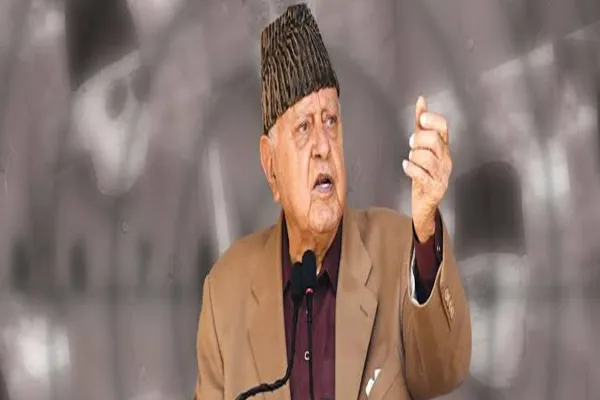
The International Institute of Advanced Islamic Studies (IAIS) Malaysia hosted Dr Ghulam Nabi Fai, Chairman of the World Forum for Peace & Justice, for a wide-ranging podcast discussion on the Kashmir dispute, its international dimensions, parallels between Kashmir and Palestine, and the urgent need for a peaceful and just settlement. The podcast was conducted by two seasoned media experts, Dr Ahmad Elmuhammadi, an academic and intellectual, and Wan Naim Wan Mansor, Fellow at IAIS.
The discussion formed part of IAIS’s broader commitment to promoting public discourse on global Muslim issues, foreign relations and social cohesion through research, strategic communication and dialogue. Dr Fai described Kashmir as one of the oldest unresolved international problems in the world, stressing that the dispute is not confined to the people of Kashmir but has profound implications for peace and stability throughout South Asia. He noted that India and Pakistan are nuclear-weapon states, making the unresolved dispute a matter of international concern.
Responding to a question about what distinguishes Kashmir from other conflicts, Dr Fai emphasized its distinctive status under international law and within the framework of United Nations deliberations. He argued that agreements between India and Pakistan, negotiated through the United Nations and endorsed by the UN Security Council, provided for the future status of the territory to be determined according to the wishes of its people under UN supervision. He said describing the Kashmiri movement simply as a separatist movement overlooks the historical and international dimensions of the dispute.
In his view, the question concerns the political future of a territory whose status was to be determined through an internationally recognized process. Drawing parallels between Kashmir and Palestine, Dr Fai pointed to the fact that both conflicts emerged prominently on the international agenda around the same period. He referred to UN Security Council Resolutions 43, 46 and 48 concerning Palestine and Resolution 47 concerning Kashmir, adopted in April 1948.
He also drew attention to what he described as demographic changes associated with settler-colonial projects in both territories, arguing that the international community should examine such developments through the framework of international law and the rights of affected populations. Dr Fai stressed that the Kashmir dispute cannot be treated merely as a bilateral disagreement between India and Pakistan. With both countries possessing nuclear weapons, he said the dispute has the potential to develop into a catastrophic conflict, making prevention and peaceful settlement a major concern for the international community.
He expressed concern that international efforts have often emphasized the “reduction of tensions” rather than addressing what he considers the core issue — the unresolved Kashmir dispute. Temporary measures, he argued, cannot substitute for a durable political settlement addressing the concerns and aspirations of the people most directly affected. Dr Fai also challenged the notion that the Line of Control should be treated as a permanent solution.
He recalled that it was originally conceived as a temporary cease-fire line pending further steps toward demilitarization and determination of the territory’s future. He argued that treating the Line of Control as a permanent international border would risk transforming a temporary arrangement into a substitute for the political settlement envisaged in the international framework. For him, a lasting peace requires addressing the underlying dispute rather than simply managing its symptoms.
Credit: Independent News Pakistan (INP)
Related News