


i BLOGS
Pakistan’s Diplomatic Drive Raises Hope for US-Iran DealBreaking
April 16, 2026
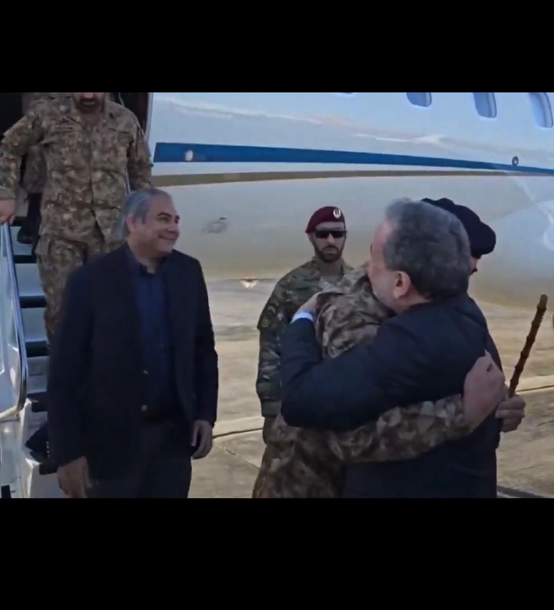
Pakistan has started a major diplomatic push in advance of a possible second round of talks between Iran and the US, putting itself in the middle of one of the region's most sensitive crises.
As part of a larger tour of the region, Prime Minister Shehbaz Sharif went to Saudi Arabia on Wednesday. At the same time, Chief of Defence Staff and Army Chief Field Marshal Asim Munir made an unexpected trip to Tehran. People see the two visits happening at the same time as a planned effort to get talks going again.
Iranian Foreign Minister Abbas Araghchi met Munir in Tehran. Iranian officials said that Pakistan has been helping Tehran and Washington send messages back and forth since the first round of talks in Islamabad ended without a deal.
Esmaeil Baqaei, a spokesman for the Iranian Foreign Ministry, said that communication through Pakistani intermediaries is still going on. This shows that both sides are still looking for diplomatic solutions, even though they have big differences.
Karoline Leavitt, the White House Press Secretary, said in Washington that talks were going on for a second round of talks that would "very likely" happen in Islamabad. She praised Pakistan's leaders, saying they were the only ones both sides could trust to mediate.
A high-ranking Iranian official told Reuters that Munir's trip was meant to bridge the gap between Tehran and Washington according to a high-ranking Iranian official who spoke to Reuters.
The first round of talks in Islamabad lasted almost 21 hours, but no deal was reached. Reports say that Iran made a 10-point proposal asking for the lifting of sanctions, the withdrawal of US troops, and recognition of its sovereignty in important waterways. Later, Tehran said that trust was still the biggest problem.
Iran has shown some willingness to compromise on nuclear issues, even though the talks are stuck. Baqaei said that there could be a discussion about the levels of uranium enrichment, but Iran says it needs to keep its rights to enrichment for peaceful purposes.
Shehbaz's meetings with Crown Prince Mohammed bin Salman in Jeddah, on the other hand, were about peace and security in the region. He is also going to Qatar and Turkey on his regional tour, where he is expected to look for more support for Pakistan's mediation.
Pakistan's recent diplomatic efforts come after it helped get a two-week ceasefire on April 8, which made the first talks possible. Officials say that Islamabad is trying to keep positive relationships with everyone while also helping both sides find common ground.
There is no date set for the next talks yet, but Pakistan's growing diplomatic role could make it stronger if it can help the process move forward.
Credit: Independent News Pakistan (INP)
Related News