


i BLOGS
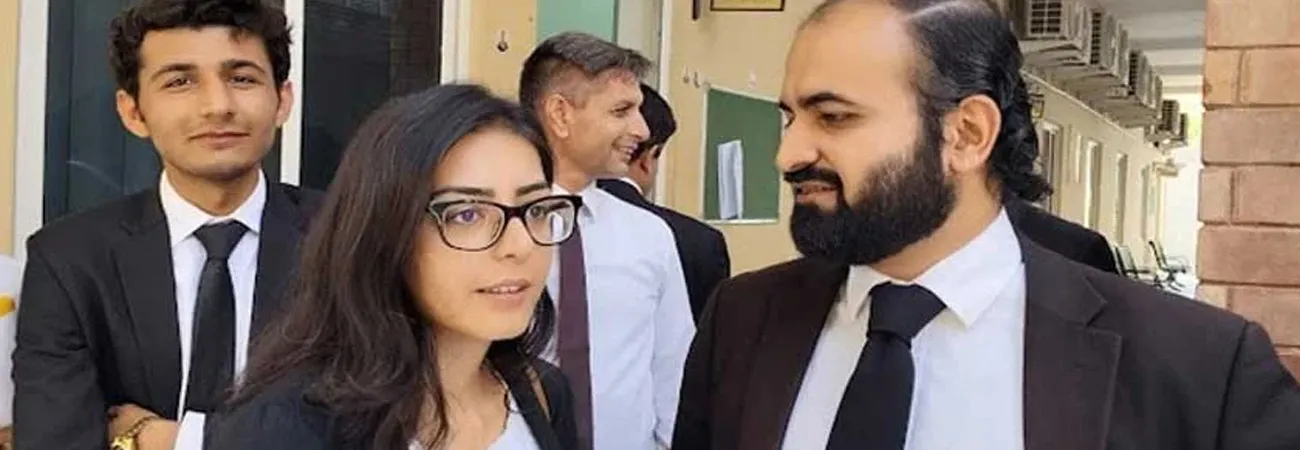
Islamabad Court Orders Arrest of Iman Mazari and Hadi Ali ChatthaBreaking
January 16, 2026
A district and sessions court in Islamabad has issued firm orders for the arrest of lawyers and activists Iman Mazari and Hadi Ali Chattha within 24 hours, raising serious questions about law enforcement efficiency and judicial authority in the federal capital. The case stems from alleged controversial social media posts registered under the Prevention of Electronic Crimes Act (PECA), 2016.
Additional District and Sessions Judge Afzal Majoka expressed strong displeasure over the failure of Islamabad police to execute arrest warrants following the cancellation of the couple’s bail. The bail was withdrawn due to repeated non-appearances and what the court described as disruptive conduct during earlier proceedings. Alongside ordering their arrest, the court also withdrew the accused’s right to cross-examination.
Prosecutors allege that Mazari and Chattha used social media to incite linguistic divisions and portray state institutions as engaging in terrorism. While the merits of these allegations will be determined through due process, the court’s focus during the hearing was squarely on the police’s inability—or unwillingness to enforce its orders.
Judge Majoka’s remarks were unusually stern. He questioned how warrants could go unexecuted in Islamabad, the seat of federal authority, and stated that the accused must be arrested “from Pakistan, India or Afghanistan,” whether “on land, at sea or in the air.” Such language highlighted the court’s insistence that judicial directives cannot be treated casually.
Senior police officials, including the Islamabad DIG and NCCIA leadership, appeared before the court and cited difficulties in locating the accused, claiming they were deliberately in hiding. The judge, however, rejected these explanations, warning of contempt proceedings if compliance was not ensured.
The court also took action against prosecutorial lapses, ordering the removal of a prosecutor for repeated absences and questioning the seriousness with which NCCIA cases were being handled.
This case has become more than a legal dispute over social media posts. It has evolved into a broader examination of accountability, institutional coordination, and the rule of law. Whether the arrests are executed within the court’s deadline may well determine how seriously judicial authority is respected in Pakistan’s capital.
Credit: Independent News Pakistan (INP)
Related News