


i BLOGS
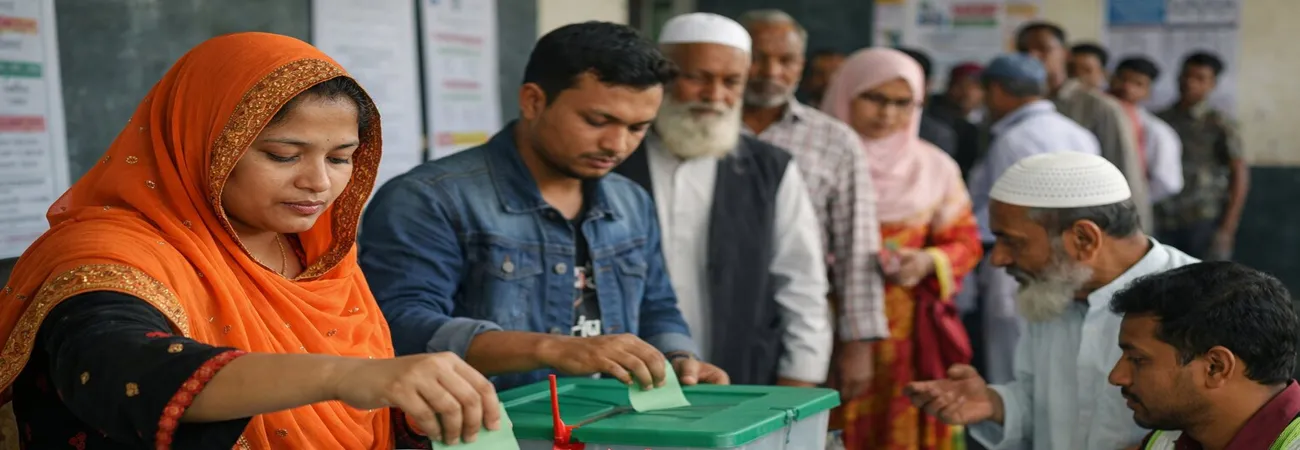
Bangladesh’s Landmark Election DayBreaking
February 12, 2026
Bangladeshis voted on Thursday in a historic national election, the first since former Prime Minister Sheikh Hasina was removed from power in 2024 following a Gen Z-led uprising. Many voters described the moment as a rare chance to take part in a genuinely free election after years of disputed polls marked by alleged intimidation and opposition boycotts.
The election is seen as critical for restoring stability in the country of around 175 million people, especially after months of unrest that disrupted major industries like the garment sector. The main contest is between two coalitions led by the Bangladesh Nationalist Party (BNP) and the Islamist Jamaat-e-Islami, with opinion polls suggesting the BNP has a slight edge. Hasina’s Awami League has been banned, and she remains in exile in India, raising concerns that Bangladesh’s shifting politics could also reshape regional influence, including giving China more room as ties with India weaken.
More than 2,000 candidates are competing for 300 parliamentary seats, with over 50 parties participating, a national record. Nobel laureate Muhammad Yunus, who leads the interim government, said the election reflects public demands for justice, equality, and democratic reform. Alongside the vote, a referendum is being held on major constitutional changes, including creating a neutral caretaker government during election periods, introducing a bicameral parliament, increasing women’s representation, strengthening judicial independence, and limiting the prime minister to two terms.
Security was tightened nationwide with nearly one million police, army, and paramilitary personnel deployed. Around 128 million voters are registered, nearly half of them women, and a large portion of the electorate is young, with many first-time voters. Some voters openly expressed support for Jamaat-e-Islami, saying they hoped its leader Shafiqur Rahman would bring religious law and eliminate corruption. Meanwhile, others supported BNP leader Tarique Rahman, seeing him as a better choice for national leadership.
Not everyone is able or willing to participate. Some low-income workers in Dhaka said they could not afford to travel back to their home villages to vote without losing essential daily wages. Others expressed frustration that the Awami League is barred, arguing that an election without all major parties leaves them feeling discouraged. Still, many Bangladeshis remain determined to vote, viewing this election as a hard-earned right after years of political tension and restricted democratic participation.
As Bangladesh moves toward the final count, the biggest challenge will be whether the election is viewed as fair and whether all parties accept the results peacefully. If the process remains credible and the outcome is respected, experts believe it could signal the beginning of a new democratic chapter for the country.
Credit: Independent News Pakistan (INP)
Related News