



INP-WealthPk

Workers’ remittances rise to $19.7bn, helping Pakistan contain external pressures
May 18, 2026
By Hasan Salahuddin
Strong inflows of workers’ remittances helped Pakistan contain external-sector pressures during the first half of FY26, with overseas Pakistanis sending $19.7 billion through formal channels, according to the State Bank of Pakistan’s Half Year Report 2025-26.
The central bank said remittances remained one of the strongest pillars supporting macroeconomic stability as widening trade deficits and weak exports continued to strain the country’s external account.
According to the report, remittance inflows increased from $17.8 billion in H1-FY25 to $19.7 billion during H1-FY26, supported by favourable labour-market conditions in Gulf economies, increased labour migration and policy measures aimed at reducing transaction costs for overseas transfers.
The SBP said workers’ remittances comfortably financed Pakistan’s trade deficit in goods and services and covered a major share of the country’s primary income deficit during the review period.
The report noted that a low premium in the kerb market and modest appreciation of the rupee encouraged overseas Pakistanis to route funds through formal banking channels instead of informal systems. The exchange rate appreciated by 1.3 percent during H1-FY26, contributing to greater stability in the foreign exchange market.
Measures introduced by the government and the central bank to improve digital payment systems and reduce remittance transfer costs also supported inflows.
The SBP highlighted the importance of Gulf economies in Pakistan’s remittance landscape, noting that around 55 percent of total remittances received between FY21 and FY25 originated from GCC countries.
This dependence, however, also poses risks to Pakistan’s external sector, as economic slowdowns or geopolitical disruptions in the Gulf region can directly affect remittance inflows.
The report warned that the ongoing geopolitical tensions in the Middle East could eventually weaken labour-market conditions in Gulf economies and affect overseas employment opportunities for Pakistani workers.
Despite rising imports and declining exports, Pakistan managed to keep its current account deficit at a moderate level during H1-FY26 because of strong remittance inflows.
The current account deficit stood at $1.4 billion in the first half, compared with surpluses of $0.9 billion in both halves of FY25.
At the same time, imports increased 12.4 percent while exports declined 5 percent during H1-FY26.
The widening trade imbalance reflected stronger domestic demand, increased industrial imports and lower rice exports.
Nevertheless, the strong flow of remittances, together with moderate financial inflows, allowed the SBP to continue building foreign exchange reserves.
The central bank’s liquid foreign exchange reserves increased from $14.5 billion at the end of FY25 to $16.1 billion by December 2025.
The report said reserve accumulation strengthened confidence in the external account and supported exchange-rate stability during the review period.
Economists say Pakistan’s reliance on remittances has become increasingly important in recent years because export growth remains structurally weak.
The SBP acknowledged that Pakistan’s exports continue to suffer from low productivity, weak diversification and limited integration into global value chains.
As a result, remittances remain a critical source of foreign exchange financing for the economy.
The report stressed, however, that long-term external sustainability cannot rely solely on overseas transfers and must eventually be supported by stronger exports and investment inflows.
The central bank said Pakistan would need to transition toward an export-oriented and investment-led growth model to reduce vulnerability to external shocks and improve long-term balance-of-payments stability.
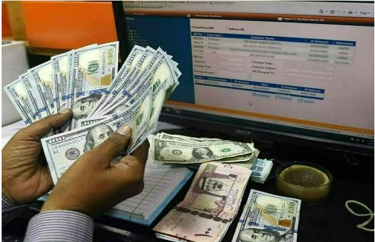
Credit: INP-WealthPk