



INP-WealthPk
Pakistani scientists develop extra-long Basmati variety
January 05, 2026
Muhammad Luqman
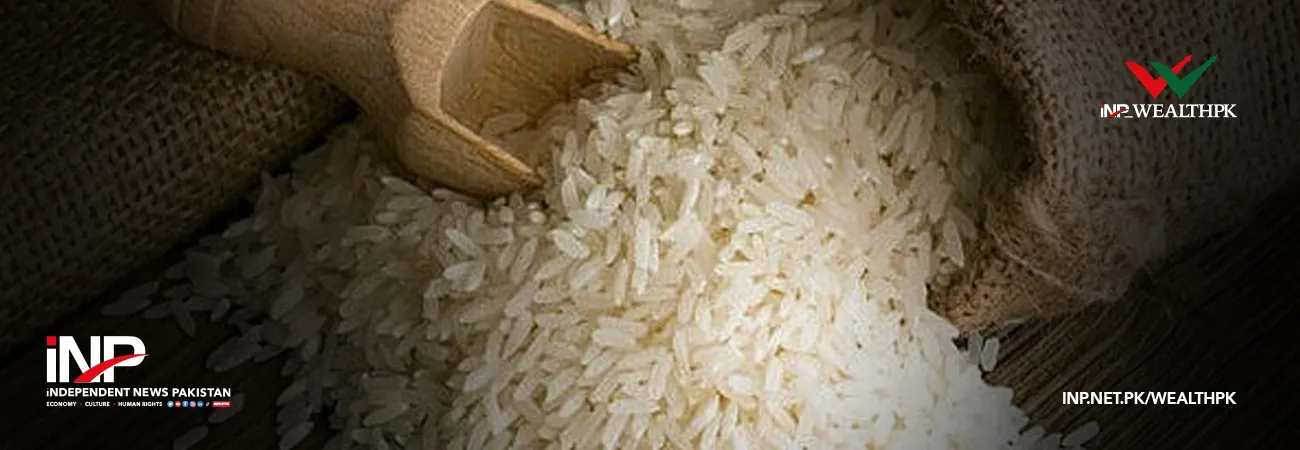
Scientists at the Rice Research Institute (RRI), Kala Shah Kaku, Lahore, have developed a new Basmati rice variety, the largest ever in Pakistan’s history. “Sultan Basmati has a grain length of 9.5mm, the longest recorded so far in Pakistan’s rice varietal spectrum,” said Dr. Usman Saleem, a senior scientist at the RRI.
Talking to Wealth Pakistan, he said the cooked grain attains a length of up to 20mm – a rare trait that attracts international markets. Previously, Kainat Basmati was considered the longest-grain variety in Pakistan, with a grain length of 8.26mm. However, scientists noted that Kainat’s major drawback is that it is not a pure Basmati line but rather a fine rice variety with a Basmati-like aroma.
Dr. Saleem said they are currently working on three additional Basmati lines and expressed hope that these varieties would be developed within the next two to three years. Sultan Basmati has a yield potential of up to 70 maunds per acre, compared to the average yield of 45 maunds per acre, which is significantly higher than existing varieties.
According to him, Sultan Basmati possesses a typical Basmati aroma and cooks easily. The crop remains lush green until maturity. Although it is a slightly late-sowing variety, it matures around the same time as other varieties. Established as a rice farm by the British government in 1926, the RRI was upgraded to a full-fledged rice research institute in the 1970s. To date, it has developed 33 high-yielding fine and coarse rice varieties, including Basmati 385, Super Basmati, Super Gold, and Chenab.
Rice exporters have welcomed the development of the new variety, expressing hope that the extra-long grain rice would help Pakistan increase its share in the international market. “Extra-long grain rice is highly sought after globally. However, the variety must be adopted quickly by the farming community to generate exportable surpluses,” said Taufiq Ahmad Khan, former senior vice chairman of the Rice Exporters Association of Pakistan (REAP).
Talking to Wealth Pakistan, he suggested that the research institute and the government work together to fully capitalize on the potential of the new variety. He also emphasized that the variety should be robust enough to prevent grain breakage during milling and cooking. “Usually, extra-long grains tend to break during the husking process, which creates a negative impression in international markets,” he said.
Khan noted that Pakistani rice varieties are well aligned with the international market demand, particularly in the Basmati and long-grain non-Basmati segments. Pakistani Basmati is globally recognized for its distinctive aroma, grain length, and cooking quality, while non-Basmati varieties are competitively priced and widely accepted in African, Middle Eastern, and Asian markets.
However, he pointed out that the government should provide incentives to the rice sector to enhance competitiveness against Indian rice. “At present, Pakistani rice is around US$200 per ton costlier than Indian rice due to several factors. Cuts in energy costs and other incentives could help bridge this gap,” the former REAP office-bearer said.
He emphasized the need to diversify export destinations rather than relying mainly on Middle Eastern and European markets. “We are now focusing more on African markets by organizing roadshows in various African capitals,” he said. Concluding, Khan said the development of new extra-long and highly aromatic rice varieties would go a long way toward making Pakistani rice more attractive and competitive in global markets.

Credit: INP-WealthPk