



INP-WealthPk

Pakistan can strengthen emergency response by drawing on China's early-warning practices
August 04, 2026
By Azam Tariq
Pakistan can strengthen its emergency response system by adapting key elements of China's integrated early-warning model, which combines timely forecasts with coordinated evacuations, emergency deployment and community preparedness, experts say.
The comparison follows China's response to Typhoon Bavi in July 2026. Ahead of the storm's expected landfall, authorities in Zhejiang province evacuated 17,110 people and placed 4,509 emergency rescue teams comprising more than 170,000 personnel on standby after raising emergency-response levels and implementing preventive measures.
For Pakistan, the need for an effective emergency response system remains pressing. Germanwatch's Climate Risk Index 2025 ranked Pakistan as the country most affected by extreme weather events in 2022. The devastating floods that year affected 33 million people, claimed more than 1,730 lives, caused damages exceeding $14.9 billion and created resilient reconstruction needs estimated at over $16.3 billion. An International Monetary Fund review, citing Pakistani official sources, said the 2025 floods affected another 6.9 million people.
Speaking to Wealth Pakistan, Muhammad Ijaz Malik, Senior Scientific Officer and Head of the Agriculture, Forestry and Land Use Section at the Global Climate-Change Impact Studies Centre (GCISC), said Pakistan should make climate and hazard assessments mandatory for urban planning and infrastructure development.
He said new settlements, roads and public infrastructure should not be approved without first assessing their exposure to floods, earthquakes, landslides and other natural hazards.
"Building regulations already exist, but enforcement must be strengthened, particularly in flood-prone and seismically active areas," he said, warning that without effective implementation, development would continue in locations exposed to foreseeable disasters.
Malik said Pakistan has already established key disaster-management institutions, including the National Disaster Management Authority (NDMA), Provincial Disaster Management Authorities (PDMAs), district administrations and technical agencies.
He noted that the Pakistan Meteorological Department (PMD) already issues forecasts and warnings for floods, heavy rainfall, tropical cyclones and glacial lake outburst floods, while its seismic centre continuously monitors earthquakes.
Drawing lessons from China, Malik said the greater need is to establish clearly defined procedures linking forecasting agencies, disaster-management authorities and local governments so that warnings quickly translate into action on the ground.
He said early warnings would become far more effective if they reached vulnerable communities rapidly in simple and easily understandable formats.
Malik also stressed the importance of regular public awareness campaigns, school-based disaster education, evacuation drills and volunteer rescue networks to improve preparedness before professional emergency services arrive.
"Since communities are often the first responders during disasters, investing in local preparedness is essential for reducing disaster losses and strengthening climate resilience," he said.
Sharing a similar view, Muneeb Tariq, a doctoral researcher at the University of Lincoln in the United Kingdom, said Pakistan's urban expansion has consistently outpaced its regulatory capacity.
He said disaster resilience should be incorporated into land-use planning rather than being treated as a compliance requirement after development projects have already been approved. Floodplain maps and seismic-risk assessments should therefore guide planning decisions before construction begins.
According to Tariq, China's most important lesson lies in creating an integrated response chain that links monitoring, risk analysis, early warnings and emergency response through clearly defined institutional responsibilities rather than allowing agencies to operate independently.
He said Pakistan's recent disaster experience suggests that warning information is often available, but its conversion into timely action can be weakened by fragmented responsibilities and unclear institutional mandates.
Tariq said emergency protocols should clearly specify which institution issues alerts, authorises evacuations and coordinates transport, shelters, relief supplies and rescue operations before disasters occur.
He also recommended establishing trained volunteer groups at the union council level with basic skills in search and rescue, first aid and hazard awareness.
In addition, he called for integrating disaster-risk education into school curricula so that preparedness becomes a continuous community practice rather than a response triggered only during emergencies.
The experts believe Pakistan already has many of the institutions needed for effective disaster management. The challenge now is to better integrate forecasting, emergency response and community preparedness so that early warnings translate into timely action, reducing disaster losses and strengthening long-term resilience to multiple natural hazards.
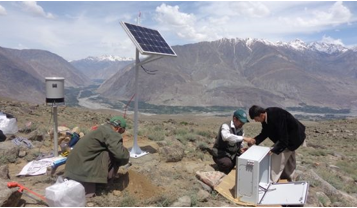
Credit: INP-WealthPk