



INP-WealthPk
Pakistan advised to adopt 10-year government funding, revive tea board
December 13, 2025
Farooq Awan
Pakistan has been advised to adopt a 10-year government funding mechanism and revive a dedicated Pakistan Tea Board under the administrative control of Khyber Pakhtunkhwa (KP) as the central institution to oversee and implement the country’s domestic tea cultivation programme, according to a strategy document available with Wealth Pakistan.
The document, prepared under the FAO Technical Cooperation Programme, states that Pakistan’s earlier attempts to build a tea industry failed largely due to the absence of a strong institution capable of long-term project execution. It recalls that the original Pakistan Tea Board—established in 1958—had played an instrumental role in developing tea plantations in the area that later became Bangladesh.
With the board dissolved after 1971, Pakistan lost the governance structure, policy support and continuity required for nurturing a perennial crop that takes nearly a decade to mature.
Under the proposed framework, the Tea Board would be re-established as a corporate entity registered with the Securities and Exchange Commission of Pakistan. It would be housed within the KP Industries Department, in line with the post-18th Amendment arrangement in which provinces hold responsibility for agriculture-related development.
According to the document, KP is the natural home for the board, as it hosts the country’s only established smallholder tea growers and the primary cluster sites identified for expansion.
The report provides detailed mandates for the new board, including the regulation of tea trade, oversight of tea pricing, development of minimum quality standards, certification processes, buy-back guarantees for green leaf, trade facilitation, and promotion of Pakistani tea in domestic and export markets.
The report also recommends forming three specialised committees: a Tea Development Committee to manage production standards, germplasm, extension services and training; a Tea Trade Committee to design incentives, handle tenders and coordinate with packers and exporters; and a Tea Promotional Committee to manage branding, social media outreach and the proposed Pakistan Tea Mark.
A central recommendation is the creation of a Tea Development Fund, designed as an endowment to support long-term financing needs. The document proposes that the fund be supported through a share of federal tea import duties, seed money from the KP government, and contributions from development partners. It stresses that predictable funding over a minimum of 10 years is essential because tea plantations require eight years to reach full commercial production, and interruptions in financing would jeopardise the entire programme.
The FAO-backed strategy also highlights the need for strong political commitment beyond a single electoral cycle, noting that governance continuity is essential for perennial crops. The proposed board would play a stabilising role by ensuring that key technical, financial and oversight functions remain intact irrespective of government changes.
According to the document available with Wealth Pakistan, the Tea Board is envisioned as the backbone for coordinating nursery expansion, land allocation, extension services, field standards, processing capacity, trade promotion, environmental compliance and financing flows.
Without such a body, the strategy warns, Pakistan would be unable to manage the complex, multi-year implementation required to establish a viable domestic tea industry capable of reducing dependence on imported tea.
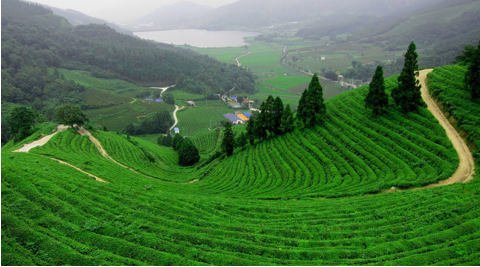
Credit: INP-WealthPk