



INP-WealthPk
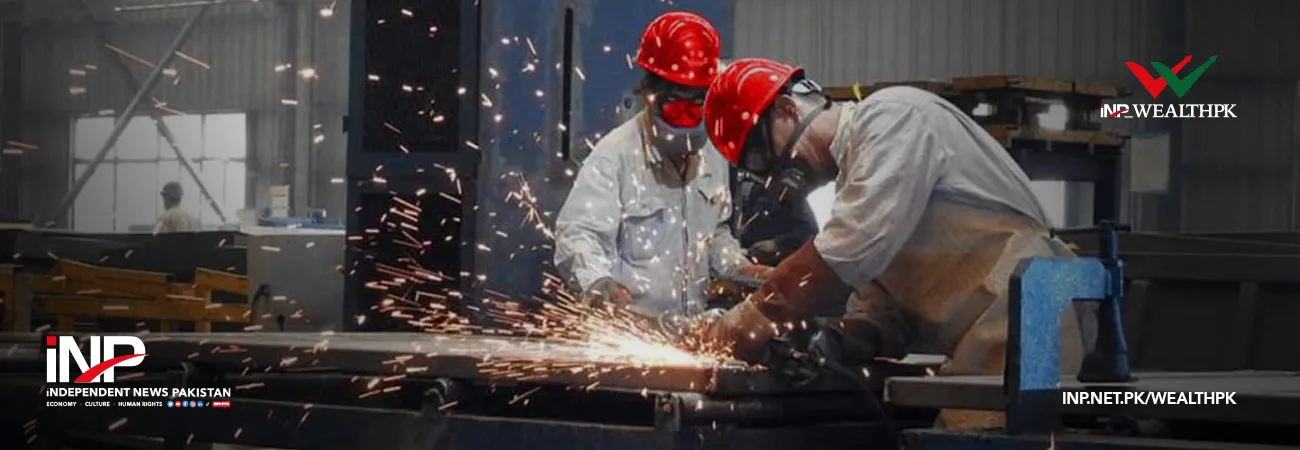
LSM grows 4.1% as autos and cement lead industrial recovery
December 01, 2025
Qudsia Bano
Pakistan’s industrial sector has shown renewed signs of momentum, with large-scale manufacturing (LSM) recording a broad-based recovery during the opening months of FY2026. Improved energy availability, better supply chain conditions, and stronger domestic demand have helped the sector regain traction after two years of subdued performance.
According to the Monthly Economic Update and Outlook for November 2025, LSM expanded by 4.1 percent during July–September, with 15 major sectors showing positive growth. The report notes that industrial activity “continued to strengthen amid implementation of economic reforms,” reflecting improved business confidence and a gradual revival in domestic production.
The auto sector emerged as one of the strongest contributors to the recovery. Production of cars surged by 70.9 percent, while manufacturing of trucks and buses grew by 96.9 percent during July–October. Similarly, the output of jeeps and pick-ups rose by 42.2 percent, indicating a revival in commercial transport demand, fleet expansion cycles, and improved availability of imported components.
The cement sector also reported robust performance, signalling renewed activity in construction and infrastructure development. Total cement dispatches reached 17.3 million tonnes, representing a 15.5 percent increase during July–October. Domestic dispatches rose by 18.1 percent to 13.9 million tonnes, driven by ongoing public-sector projects and steady private construction. Meanwhile, exports increased by 6 percent to 3.42 million tonnes, benefiting from improved regional demand and competitive pricing.
Other industries, including textiles, wearing apparel, non-metallic minerals, food processing, electrical equipment, and petroleum products, also posted gains during the quarter. The government attributes the expansion to better industrial inputs, easing import constraints, and improved operational conditions across manufacturing zones.
The report highlights that September alone witnessed a 2.7 percent year-on-year increase in LSM output and a 2.1 percent month-on-month improvement, suggesting that the upward trajectory is becoming more consistent. Sector analysts believe that stabilising exchange rates, improved supply of credit for manufacturing, and gradual restoration of local purchasing power are contributing factors.
However, risks remain. Global tariff uncertainties, volatile commodity markets, and rising fuel prices could pressure production costs in the months ahead. Additionally, supply disruptions from earlier seasonal floods have not fully dissipated, although the document notes that they are “expected to ease out in the coming months.”
Despite these challenges, the government is optimistic about achieving the targeted industrial growth for FY2026. Efforts to support manufacturing include facilitating machinery imports, improving access to raw materials, implementing energy-sector reforms, and digitising industrial compliance processes.
With both domestic and export-oriented industries showing signs of recovery, policymakers believe that industrial output will continue to strengthen, helping boost employment, exports, and fiscal revenues. The broader revival of Pakistan’s manufacturing base is seen as an essential pillar for the country’s ongoing economic stabilisation and medium-term growth outlook.
Credit: INP-WealthPk