


INP-WealthPk
Hormuz disruption may trigger food inflation, hit crop output in Pakistan
April 20, 2026
By Azeem Ahmed Khan
Pakistan risks higher food inflation and reduced crop productivity if fertiliser flows through the Strait of Hormuz remain disrupted, underscoring the urgent need to diversify sourcing and strengthen domestic production, a leading expert warned.
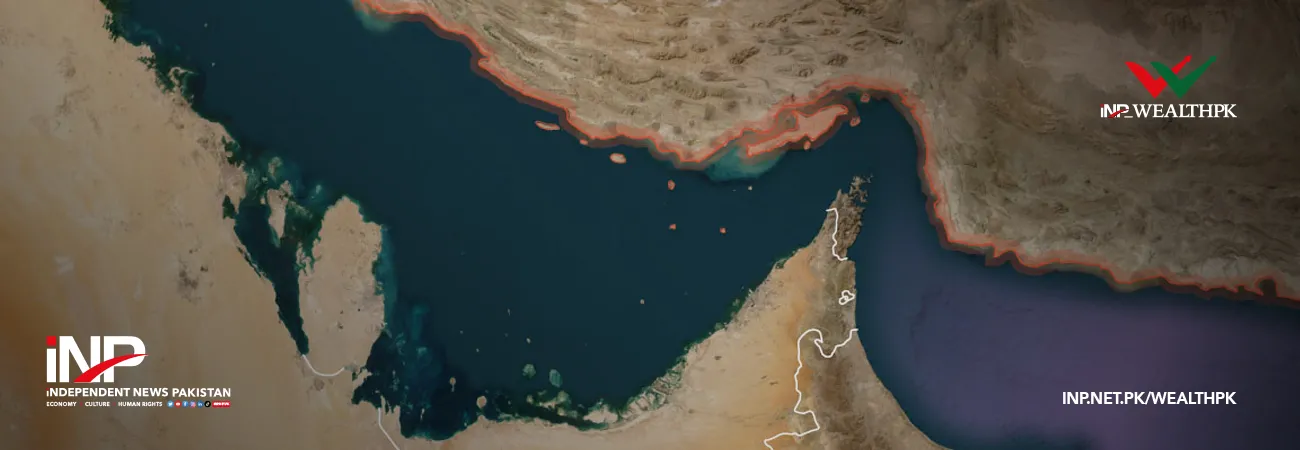
About one-third of globally traded fertiliser — including nitrogenous, phosphate and sulphur products — passes through the Strait of Hormuz, making it a critical chokepoint for agricultural inputs, Dr. Zaffar Mahmood, an international agrifood systems expert and WEFE Nexus consultant with the Islamic World Educational, Scientific and Cultural Organization, told Wealth Pakistan.
Dr. Zaffar, who has also served as a food safety specialist with the Food and Agriculture Organization in Pakistan, said the Gulf supplies 30–35% of global urea and 20–30% of ammonia exports, meaning that any prolonged disruption could significantly tighten supplies. “A sustained blockage could reduce crop productivity and trigger serious food security concerns,” he said.
He noted that the impact would extend across South Asia — including Pakistan, India and Bangladesh — as well as parts of Africa such as Tanzania, Kenya and Sudan, and major economies like the United States and Brazil. Low- and middle-income countries would be the most affected due to heavy import dependence and limited domestic reserves.
“For countries like Pakistan, the situation depends critically on existing reserves and local production capacity,” Dr. Zaffar said. While Pakistan has a relative advantage in urea production, rising energy costs — with natural gas as the primary feedstock for nitrogen fertilisers — could increase input prices and fuel inflation.
Global fertiliser prices have already risen from pre-crisis levels, particularly urea, he noted, adding that timing remains critical. Countries entering sowing seasons without sufficient stocks may face severe setbacks, while existing reserves may only cushion one or two crop cycles. “A prolonged crisis would deepen vulnerabilities considerably,” he warned.
On mitigation, he said there are no immediate solutions, urging medium- to long-term measures such as the use of organic fertilisers, precision agriculture and improved nutrient-use efficiency.
Dr. Zaffar also highlighted structural inefficiencies, noting that Pakistan loses significant value due to low nitrogen-use efficiency and post-harvest losses of up to 40%, calling for improvements across the agrifood chain.
He stressed the need to diversify fertiliser import sources and enhance domestic production capacity, adding that countries must build resilience through strategic reserves and sustainable agricultural practices. He described the situation as part of a broader food-energy-water-environment nexus, warning that disruptions at the farm level ultimately translate into higher consumer prices.
Citing a comparable episode, he said soybean meal export restrictions in key producing countries had previously tightened poultry feed supplies, leading to sharp increases in chicken and egg prices in import-dependent markets. “These shocks create a global ripple effect,” he noted.
He concluded that farmers’ concerns are well-founded and the window for action is narrowing, stressing that reserves, diversified supply chains and sustainable agriculture have become strategic imperatives for Pakistan’s food security.
Credit: INP-WealthPk