


INP-WealthPk

Digitised land records helping minimise real estate fraud in Punjab
April 09, 2026
By Muhammad Luqman
The digitisation of land records and reduced human intervention in land transactions are helping address real estate fraud in Punjab, which had remained widespread in the past.
“The digitisation of land records in Punjab represents one of the largest governance reforms in the province’s history,” said Ikramul Haq, Director General of the Punjab Land Records Authority (PLRA). In an interview with Wealth Pakistan, he said the province is addressing real estate fraud through digitisation of land records under the PLRA.
He said almost all rural and agricultural land records have been scanned and digitised, with nearly 98% fully computerised. The system now covers more than 46 million land parcels and around 55 million landowners across Punjab.
To expand coverage to urban and peri-urban areas, the Punjab government has launched the Punjab Urban Land Systems Enhancement (PULSE) project, which includes cadastral mapping, development of geospatial data, and digitisation of urban land records. The initiative focuses particularly on Lal Lakeer areas of cities, where records had historically remained undocumented since the British period.
Lal Lakeer (or Lal Dora) refers to the traditional boundary drawn during the colonial era to separate residential village land (Abadi Deh) from agricultural fields. “PULSE is being implemented in phases across several districts, with Lahore among the priority districts,” Ikramul Haq said, adding that digitisation of Lal Lakeer areas in Lahore will be completed after surveys, mapping, and legal verification under the ongoing project.
He said the recently launched Green Property Certificate is aimed at ensuring secure, biometric-verified property transactions. The initiative provides online verification, GIS-linked records, and centralised data to help prevent the use of forged documents and unauthorised transfers.
Through Arazi Record Centers, computerised databases, and initiatives such as PULSE and the Green Property Certificate, the PLRA is working to improve transparency and access to land administration services. In the past, common real estate frauds included forged documents, fake registry papers, the sale of the same plot to multiple buyers, impersonation of owners, and illegal occupation of land.
For rural and agricultural land, Arazi Record Centers (ARCs) provide computerised Fard (record of rights) and mutation services, reducing reliance on intermediaries. The PLRA has established around 178 Arazi Record service points across Punjab, including 158 tehsil-level centres and 20 mobile units serving remote areas.
Key services at these centres include issuance of Fard-e-Malkiat and mutation registration, both processed electronically. “PLRA is also working on recovering missing mutations and correcting historical inconsistencies to further strengthen the system,” Ikramul Haq said.
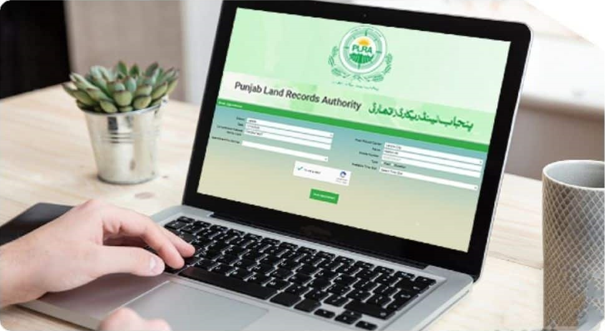
He added that an online verification facility allows buyers to check ownership using CNIC numbers, registry details, or location information, while biometric authentication ensures that property transfers are authorised by the actual owner. He said the Record of Deeds (ROD) portal is also being used to track property transactions.
On the traditional patwari system, he said digitisation has reduced its discretionary role in land record management. “Services such as issuance of Fard-e-Malkiat, mutation registration, biometric verification, and record maintenance are now handled through computerised systems at Arazi Record Centers,” he said, adding that patwaris now mainly perform field verification and revenue administration.
He said the PLRA has also introduced the Arazi Moawin initiative under a franchising model to expand service delivery. Under this model, third-party franchisees are given secure system access against a prescribed fee, while they manage infrastructure and operational costs.
The initiative has increased service points, improved accessibility, reduced travel time and waiting periods, and expanded service coverage across Punjab.
Credit: INP-WealthPk