


INP-WealthPk
Cold wave pushes LPG consumption to record 7,000 tonnes amid gas shortages
January 21, 2026
Muhammad Luqman
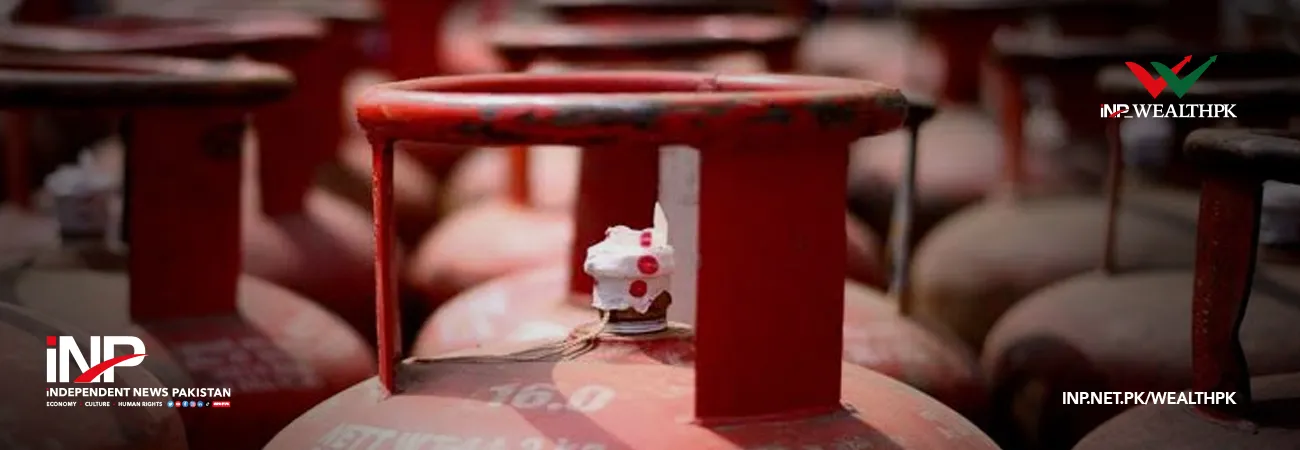
The severe cold wave gripping the Punjab plains and other parts of the country, combined with low pressure in piped natural gas supply, has driven Pakistan’s daily consumption of liquefied petroleum gas (LPG) to a record 7,000 metric tonnes.
“Of this volume, only about 2,000 tonnes are produced locally by refineries and LPG production plants, while the remaining demand is met through imports,” said Belal Jabbar, Chief Executive Officer of a Lahore-based LPG marketing company.
Pakistan’s domestic LPG production is sourced from natural gas fields and oil refineries, meeting around 40 percent of total demand. Gas processing contributes roughly 60 percent of local production, while refineries account for the remaining 40 percent, with major contributions coming from fields in Sindh and Balochistan.
Talking to Wealth Pakistan, Jabbar said most of the nearly 5,000 tonnes of imported LPG is currently sourced from Iran through both land and sea routes. “If US sanctions affect the import of Iranian gas, Pakistan will have to source LPG from Iraq and Oman, and possibly some consignments from Abu Dhabi,” he said.
Raising safety concerns, Jabbar urged the Oil and Gas Regulatory Authority and district administrations to take strict action against factories manufacturing substandard LPG cylinders. He said marketing companies are supplying cylinders of various capacities to discourage illegal decanting, as required by law. “Despite this, people still get one to two kilograms of gas filled from illegal decanting points,” he claimed.
He also called for allowing public transport vehicles to refuel LPG at authorized Autogas stations, noting that many vehicles are currently refueled through illegal decanting outlets, posing serious safety risks.
LPG distributors, however, argue that the limited availability of smaller-capacity cylinders has contributed to the nationwide spread of decanting. “OGRA should strictly enforce the requirement for marketing companies to provide 2 kg, 4 kg and 6 kg cylinders in the market,” said Irfan Khokhar, Chairman of the Pakistan LPG Distributors Association.
Speaking to Wealth Pakistan, Khokhar said OGRA regulations already mandate the provision of such cylinders, but alleged that, barring a few companies, most marketing firms supply only standard 11.8 kg domestic and 45 kg commercial cylinders. He also backed calls for a crackdown on manufacturers and sellers of substandard and faulty cylinders.
According to Khokhar, during the first two weeks of January alone, around 500 LPG-related fire incidents were reported across Punjab, resulting in 26 deaths and 255 injuries. He called for legislation to ensure strict punitive action against those involved in the manufacture and sale of substandard cylinders.
Responding to these concerns, OGRA officials said the regulator has launched a nationwide campaign against the manufacture of substandard LPG cylinders. “Our teams, in coordination with district governments, remain active in the field throughout the year,” said Imran Ghazanvi, Senior Executive Director of OGRA, while talking to Wealth Pakistan.
He advised consumers to purchase LPG cylinders only from authorized manufacturers, whose details are available on OGRA’s website, and stressed that curbing the sale of substandard cylinders requires coordinated action by local and district authorities.
Credit: INP-WealthPk