

INP-WealthPk
China-EU economic engagement helps stabilise global trade expectations
November 10, 2026
By Qudsia Bano
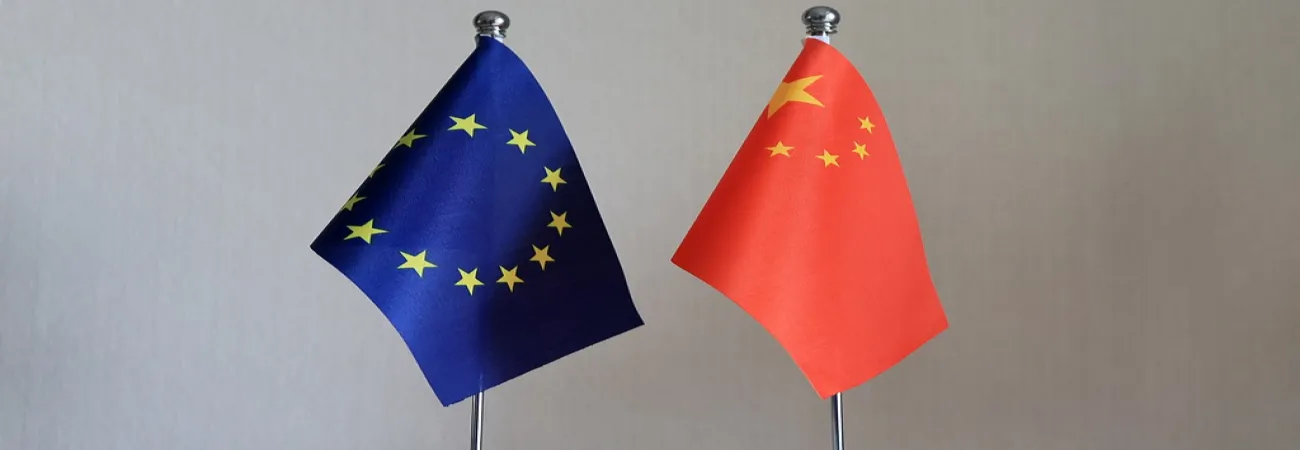
Growing trade and investment policy coordination between China and the European Union is helping improve global trade expectations, as both sides seek to manage commercial differences, strengthen regulatory predictability and maintain supply-chain stability amid rising protectionism and uncertainty in the international trading system.
The renewed engagement reflects the importance of structured dialogue between two major economic partners whose trade policies influence manufacturing, investment and supply chains across the global economy.
The second China-EU Trade and Investment Consultations, held in Beijing on October 8–9, provided a framework for addressing differences over tariffs, export controls, market access and industrial policies. The meeting was co-chaired by Chinese Commerce Minister Wang Wentao and European Commissioner for Trade and Economic Security Maroš Šefčovič.
The consultations resulted in 16 areas of consensus covering trade and investment balancing, export controls, intellectual property rights and World Trade Organization (WTO) reform. A ministerial-level video conference is planned for January, followed by a third ministerial meeting in March 2027.
The importance of continued engagement is underlined by the scale of bilateral commerce. According to Eurostat, the European Union imported goods worth €559.4 billion from China in 2025 while exporting €199.6 billion, leaving a goods trade deficit of €359.8 billion.
Compared with 2024, goods exports from the EU to China declined by 6.5%, while imports from China increased by 6.4%.
Trade remained substantial in 2026. During the second quarter, China was the EU's largest supplier of goods, accounting for €153.6 billion, or 21.9%, of total extra-EU imports. EU exports to China reached €50.3 billion during the quarter, increasing by 2.8% from the corresponding period of 2025.
Dr Hassan Daud Butt, Senior Advisor to Energy China and former Project Director of the China-Pakistan Economic Corridor, told Wealth Pakistan that the latest engagement indicated that both sides recognised the economic costs of allowing commercial disagreements to widen unchecked.
“When two major economic centres are connected through trade, manufacturing and supply chains, prolonged friction eventually creates costs for businesses on both sides. The significance of the latest talks is that China and the EU are trying to strengthen mechanisms through which disagreements can be managed before they develop into broader disruptions,” he said.
Butt said improved predictability in China-EU economic relations could also benefit economies connected with their production and trading networks.
“Trade disputes between major economies do not remain confined to those economies. They affect intermediate goods, investment decisions, shipping routes, technology markets and demand across third countries. For developing economies, a more predictable trading environment is generally more supportive of investment and exports,” he said.
The October consultations addressed several issues that had become sources of trade friction.
China and the EU agreed to explore the possibility of reducing tariffs on certain goods within WTO rules and to launch a technical dialogue on the EU's Foreign Subsidies Regulation.
The two sides also agreed to continue discussions on market-access issues involving medical devices and agricultural products, while maintaining communication on EU guidance concerning financing for inverter projects and regulations affecting cosmetics and pharmaceuticals.
Electric and hybrid vehicles were another major area of negotiation.
China and the EU discussed ways to prevent further escalation of trade tensions involving battery electric vehicles and hybrid vehicles. The EU agreed to continue procedures related to company price undertakings and reviews associated with its anti-subsidy case involving Chinese battery electric vehicles.
China's Ministry of Commerce separately said the two sides had reached an arrangement concerning hybrid vehicle trade based on principles of non-discrimination, compliance with WTO rules and continued room for Chinese exports.
Export controls also featured prominently in the consultations.
China agreed to continue facilitating export licence applications for rare earths and permanent magnets destined for European users through its green-channel mechanism, while the European side agreed to continue working with member states on priority licensing cases involving exports of dual-use goods to China.
Both sides also agreed to strengthen their Export Control Dialogue, improve communication on specific cases and examine possible measures to facilitate legitimate trade.
Butt said this aspect of the relationship had become increasingly important because modern trade policy extends well beyond tariffs.
“Export controls, strategic technologies, investment screening, subsidies and access to critical raw materials are becoming central elements of economic policy. That makes regular coordination more important because regulatory decisions in one major market can quickly affect manufacturing and investment decisions elsewhere,” he said.
The EU continues to describe its broader approach towards China as “de-risking, not decoupling,” seeking to reduce critical dependencies and vulnerabilities while maintaining economic relations.
The European Commission says the EU remains committed to cooperation with China at bilateral and multilateral levels while addressing concerns over market access, subsidies and strategic dependencies.
China, in turn, has called for addressing trade disputes through dialogue and WTO mechanisms while expressing concern over restrictive European trade measures affecting Chinese companies.
Despite these differences, the consultations identified several areas where economic cooperation could expand.
According to China's Ministry of Commerce, the two sides see potential for cooperation in artificial intelligence, new energy, services trade, the digital economy and green and low-carbon development.
They also agreed to explore two-way investment cooperation and continue exchanges on intellectual property protection and WTO reform.
Butt said these areas could become increasingly important if both sides succeeded in improving regulatory predictability.
“The relationship should not be viewed only through the disputes that currently dominate headlines. China and Europe also have significant capabilities in renewable energy, manufacturing, digital technologies and industrial innovation. If businesses have clearer rules and greater certainty, those sectors can create room for additional investment and commercial cooperation,” he said.
For Pakistan, developments in China-EU trade have particular relevance because China is a major investment and development partner, while the European Union remains one of Pakistan's most important export destinations.
Butt said Pakistani businesses should closely follow changes in standards, technology policies and supply-chain requirements emerging from the China-EU relationship.
“Pakistan is economically connected with both sides in different ways. Changes in Chinese industrial supply chains or European market requirements can eventually affect Pakistani exporters and manufacturers. Understanding these shifts early can help businesses adapt rather than respond after new standards or trade patterns are already established,” he said.
The consultation mechanism remains relatively new. Its first meeting was held in Brussels in June, after which the two sides established workstreams covering trade and investment balancing, export controls, intellectual property rights and WTO reform.
The decision to continue the mechanism into 2027 indicates that both sides intend to maintain a structured channel for managing their economic relationship.
However, major differences over subsidies, industrial policy, electric vehicles, market access and economic security remain unresolved.
The significance of continued engagement therefore lies in managing these differences through dialogue and reducing the risk of individual disputes escalating into wider trade restrictions.
Butt said maintaining that process would be important for the global economy.
“China and the EU do not need to agree on every policy issue for economic coordination to have value. What matters is whether they can keep communication open, resolve practical problems and prevent individual disputes from producing unnecessary shocks across global supply chains,” he said.
Credit: INP-WealthPk
Related Articles