



INP-WealthPk

China-Central Asia trade growth opens gateway opportunity for Pakistan
May 18, 2026
By Qudsia Bano
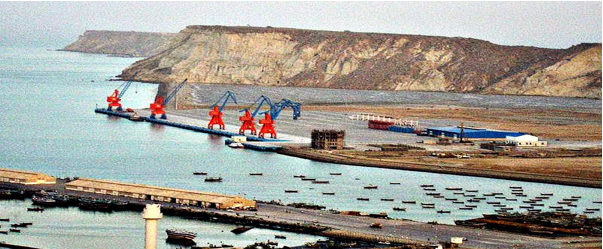
China’s accelerating economic and infrastructure engagement with Central Asia is creating fresh momentum for Pakistan to position itself as a regional trade and transit gateway linking western China and the landlocked Central Asian economies with global maritime markets through Gwadar and Karachi ports.
Trade between China and the five Central Asian countries reached a record $94.8 billion in 2024, according to official Chinese customs data released through China’s State Council Information Office.
The increase in regional trade is also being supported by expanding rail connectivity. According to official Chinese transport data, China operated 11,920 freight train trips to Central Asia in 2024, representing an increase of 11.3 percent year-on-year.
The momentum continued into 2025. In the first seven months alone, 8,526 Central Asia freight train trips were recorded, up 23.2 percent from the corresponding period a year earlier, according to information released by China’s State Council through its official government portal.
Analysts believe the expansion of China-Central Asia trade corridors is increasing the strategic importance of Pakistan’s transport network, particularly as Beijing seeks shorter and more diversified routes connecting western China with the Arabian Sea and Middle Eastern markets.
Pakistan has recently activated alternative westward trade corridors through China and Iran to improve access to Central Asian markets. According to government and establishment sources cited by Business Recorder, the routes are intended to reduce reliance on Afghan transit pathways while strengthening connectivity with Kazakhstan, Kyrgyzstan, Tajikistan, Turkmenistan and Uzbekistan.
The first shipment from Kyrgyzstan recently arrived through the newly operational China-linked trade route connecting Central Asia with Pakistan’s southern seaports, according to reports related to the launch of the corridor.
Pakistan’s Ministry of Foreign Affairs has also stated that the Uzbekistan-Afghanistan-Pakistan Railway Project is designed to link Central Asian countries with Pakistani seaports and facilitate regional trade and transit activity.
The proposed railway corridor is expected to connect Termez in Uzbekistan with Pakistan through Afghanistan, significantly reducing cargo transit times between Central Asia and Pakistani ports.
The initiative is also receiving renewed regional support. Uzbekistan formally approved procedures in early 2026 to advance the joint feasibility process for the trans-Afghan railway corridor, while Kazakhstan has shown interest in financing railway connectivity to Pakistani ports through Afghanistan.
Dr. Khalid Waleed, Senior Research Fellow at SDPI, said China’s westward commercial expansion is gradually reshaping regional freight dynamics in Pakistan’s favour.
“Central Asia remains heavily dependent on long and expensive transit routes through Russia, the Caucasus and Iranian corridors. If Pakistan can ensure efficient customs handling, secure cargo movement and modern logistics infrastructure, it can become the shortest commercial outlet for several Central Asian economies,” he said.
He noted that Gwadar’s long-term significance lies not only in Chinese investment under CPEC but also in its potential integration into broader Eurasian supply chains.
“China is expanding industrial and energy partnerships across Central Asia. Those investments will eventually require faster access to warm-water ports for exports and imports. Pakistan’s geography naturally positions it as a bridge between these regions,” he added.
Noman Ahmed, Assistant Director at a freight forwarding and supply chain services company, said the recent activation of alternative corridors through China and Iran indicates that regional connectivity planning is increasingly moving from diplomatic discussions toward practical trade operations.
“Pakistan’s transport and warehousing sectors could benefit substantially if these corridors become commercially stable. Increased cargo transit would generate demand for logistics services, cold storage facilities, customs processing and trucking infrastructure,” he said.
He stressed that infrastructure development alone would not guarantee Pakistan’s emergence as a regional trade gateway.
“The key challenge is consistency. International traders seek predictable border management, digital customs systems and secure transit operations. If Pakistan addresses these operational gaps, regional transit trade could become a major non-traditional source of economic activity,” he said.
China’s broader Belt and Road initiative has increasingly focused on diversifying Eurasian trade routes amid evolving geopolitical and supply chain risks. Experts believe Pakistan’s role could expand further if regional rail and road projects linking Central Asia, Afghanistan, western China and Pakistani ports move into large-scale implementation in the coming years.
According to Pakistan’s Ministry of Foreign Affairs, the Uzbekistan-Afghanistan-Pakistan railway initiative is expected to promote regional stability, growth and development by strengthening trade and transit integration across South and Central Asia.
Credit: INP-WealthPk